
Full article — scored 9/10
IAEA Warns Zaporijia Nuclear Plant Could Lose Power Within Ten Days
The Zaporizhzhia nuclear power plant, Europe’s largest nuclear facility, is again at a critical safety threshold: the IAEA says it has been cut off from external electricity for more than a week, is relying on emergency diesel generators, and could face a full station blackout in roughly ten days unless grid power or fuel deliveries are restored.
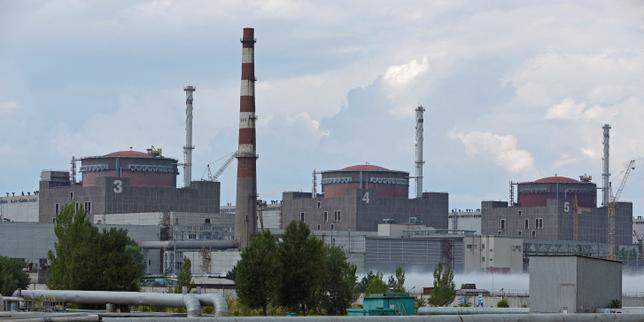
A ten-day clock at Europe’s largest nuclear plant
The warning from the International Atomic Energy Agency is stark but precise: Zaporizhzhia nuclear power plant is not currently without all power, but it is without off-site power, and that distinction is now the center of the safety crisis. Since August 20, the Russian-occupied plant in southeastern Ukraine has been running essential nuclear safety and security systems on emergency diesel generators after losing its last remaining external line, the 330 kV Ferosplavna-1 connection .
IAEA Director General Rafael Mariano Grossi said the plant could face a station blackout within approximately ten days if external electricity is not restored or additional diesel is not delivered soon . In nuclear safety language, a station blackout means a far more dangerous condition than the present loss of the grid: it implies the site can no longer count on the emergency electrical supply needed to keep critical safety systems functioning.
The immediate danger is not that Zaporizhzhia is producing power and suddenly needs to shut down. The six reactors have been non-operating and have not generated electricity since 2022, but even shut-down reactors and spent fuel pools require reliable power for cooling, instrumentation and other safety functions . That is why diesel fuel, normally a backup layer, has become the plant’s lifeline.
What happened on August 20
According to the IAEA, the plant lost the Ferosplavna-1 line on August 20 following military activity on the northern side of the Dnipro River . The Dnipro area around the plant remains militarized and contested, and the facility has repeatedly been exposed to shelling, drones and damage to electrical infrastructure since Russia seized it in March 2022 .
Before the full-scale war, Zaporizhzhia had access to ten off-site power lines; today, the IAEA says the loss of the final remaining line has forced the plant to operate several emergency diesel generators to meet its own needs . The most important loads are the pumps that cool all six reactors and the pools holding spent nuclear fuel .
The agency’s experts, permanently stationed at the site, visited most of the plant’s 20 emergency diesel generators earlier in the week to check tank levels and assess how long the available fuel could support the plant if the external line remains down . On August 28, plant officials told the IAEA that roughly ten days of diesel fuel remained available on site for generator operation, which the agency described as the minimum regulatory requirement .
Why diesel logistics now matter as much as the power line
Grossi’s statement put unusual emphasis on logistics. Diesel generators can provide an essential bridge when a nuclear plant loses off-site power, but only if the machines remain reliable and the fuel supply chain keeps moving. In this case, the IAEA said the most recent delivery to the plant’s off-site fuel farm occurred almost half a year ago, in March, while a planned delivery in May was delayed because of frequent military activity in the area .
The agency has also not been able to visit that off-site fuel storage facility since March 2025, after the plant cited security reasons . That matters because the IAEA’s ability to verify fuel reserves and supply arrangements is part of the confidence needed in a prolonged emergency.
There has been some replenishment: IAEA monitors observed the transfer of several dozen tonnes of diesel fuel from two different off-site locations near the plant on August 27 and 28 . But that did not eliminate the warning. The figure that matters now is the combination of usable fuel, reliable generators, safe routes and time. If any one of those elements fails before the Ferosplavna-1 line is repaired or fuel stocks are increased, the plant’s margin narrows.
The repair problem: a ceasefire for a power line
The IAEA says it is working to establish another localized ceasefire zone to allow repairs to the Ferosplavna-1 line . If successful, this would be the seventh such arrangement negotiated by the agency since late last year to facilitate work around the plant’s damaged power infrastructure .
This is not a routine maintenance issue. Electrical repairs near an active front require access, security assurances and coordination between two sides that regularly accuse each other of endangering the facility. The IAEA’s role is technical and diplomatic: it cannot impose a ceasefire, but it can try to create a narrow safety corridor around the specific repair task.
Le Monde reported early on August 30 that Grossi had warned the plant could suffer a general power outage in about ten days without the restoration of external supply or further diesel deliveries, and that the external supply had been cut since August 20 after the last line stopped operating . That timing means the agency’s warning is not an abstract scenario but an operational countdown already underway.
Drone incidents add to the pressure
The power emergency is unfolding amid fresh reports of drone incidents at the site. The IAEA said it was informed of three drone incidents earlier in the week: one on August 25 near the cooling pond, injuring two plant employees, and two on August 26, including a drone detonation at the dry spent fuel storage site and another reported strike on a sprinkling device linked to the plant’s power units system .
Grossi said attacks that threaten staff or strike areas related to spent fuel storage or cooling ponds are unacceptable, even when there is no impact on nuclear material . The agency said radiation levels at the site remained normal . Energoatom, Ukraine’s nuclear operator, separately reported that from August 24 to August 28 gamma radiation dose rates around the temporarily occupied Zaporizhzhia plant remained within the natural background range, at 0.1–0.3 μSv/h, and did not indicate a radiation hazard to the population .
The absence of an abnormal radiation reading is important, but it should not be confused with the absence of risk. The current risk is primarily one of degraded defense in depth: the plant has lost its normal external electrical supply, is relying on emergency systems, faces uncertain fuel logistics, and remains in a conflict zone where drones and explosions are being reported close to nuclear safety-related areas.
The wider safety meaning of “blackout”
News reports have described this as another blackout at Zaporizhzhia, and Al Jazeera, citing the IAEA and AP, reported that this is the 27th time since Russia’s invasion that the plant has had to rely on emergency diesel supplies . But the IAEA’s most consequential phrase is “station blackout within approximately ten days” .
A loss of off-site power is already serious. A station blackout would be more severe because it would mean the plant no longer has the electricity required from either the grid or emergency diesel generators to perform essential safety functions. Cooling needs are lower than they would be at an operating reactor, because all six reactors are shut down, but they are not zero. Spent fuel and reactor cores still require heat removal, monitoring and water management .
The IAEA’s message is therefore a warning about time-dependent resilience. For a short event, diesel generators can be an effective backup. For a prolonged event in a war zone, the reliability of fuel deliveries, generator maintenance and repair access becomes just as important as the amount of fuel currently in tanks.
A plant caught between technical necessity and military reality
Zaporizhzhia’s safety problem is not only engineering; it is geography and control. The plant sits near the Dnipro River in a sector shaped by military activity, while its operating status and access conditions are affected by Russian occupation. The Straits Times reported that both sides in the conflict regularly accuse the other of attacking the site and noted that IAEA teams have maintained a permanent presence at the plant since September 2022 .
The IAEA has not assigned blame for the latest drone incidents in its public statement. Its appeal is instead framed around restraint, repair and logistics: stop attacks near safety-related areas, restore the external line, and keep diesel routes open. That focus reflects the agency’s limited but crucial mandate. It is not there to decide battlefield responsibility; it is there to prevent a nuclear accident.
What to watch next
The next indicators are concrete. First, whether the Ferosplavna-1 line can be repaired under a localized ceasefire. Second, whether additional diesel can reach the site before the ten-day reserve becomes a shorter and more volatile margin. Third, whether the emergency generators continue to operate without failure. Fourth, whether drone and explosion reports near the plant subside or escalate.
For now, the IAEA’s assessment is simultaneously reassuring and alarming. Reassuring, because radiation levels remain normal and the plant still has emergency power. Alarming, because Europe’s largest nuclear plant is running on a backup system whose fuel horizon is measured in days, not weeks, while repair work depends on a negotiated pause in fighting. The agency’s warning is not that a nuclear incident has occurred; it is that the layers designed to prevent one are being stripped away.
Sources from the last 72 hours
- [1]Ukrainian nuclear power plant without external power for over a weekAug 29, 2026, 12:00 AM UTC
- [2]Ukraine’s occupied nuclear plant running on generators, with only 10 days’ worth of dieselAug 29, 2026, 8:36 PM UTC
- [3]Ukraine war briefing: Nuclear plant has lost power and running on generators, UN watchdog saysAug 30, 2026, 1:07 AM UTC
- [4]Radiation status at Zaporizhzhia NPP from August 24 to August 28, 2026 – within current standardsAug 27, 2026, 9:00 PM UTC
- [5]Update 364 – IAEA Director General Statement on Situation in UkraineAug 28, 2026, 10:00 PM UTC
- [6]EN DIRECT, guerre en Ukraine : la Russie dit préparer des « frappes massives contre les installations énergétiques de l’Ukraine »Aug 30, 2026, 8:53 AM UTC
AI-generated article based on recent web research, then preserved as a dated editorial snapshot.