
Daily Podcast full article
Tesla's Biggest Problem (Is Not What You Think)
Tesla’s challenge is no longer simply whether it can build a cheaper electric car. The fresh evidence around Cybercab suggests a larger strategic pivot: Tesla is trying to turn the long-promised $25,000 mobility idea into a recurring robotaxi network, but the hard part is scaling safety, regulation, fleet economics and infrastructure faster than Uber, Waymo and the market can react.
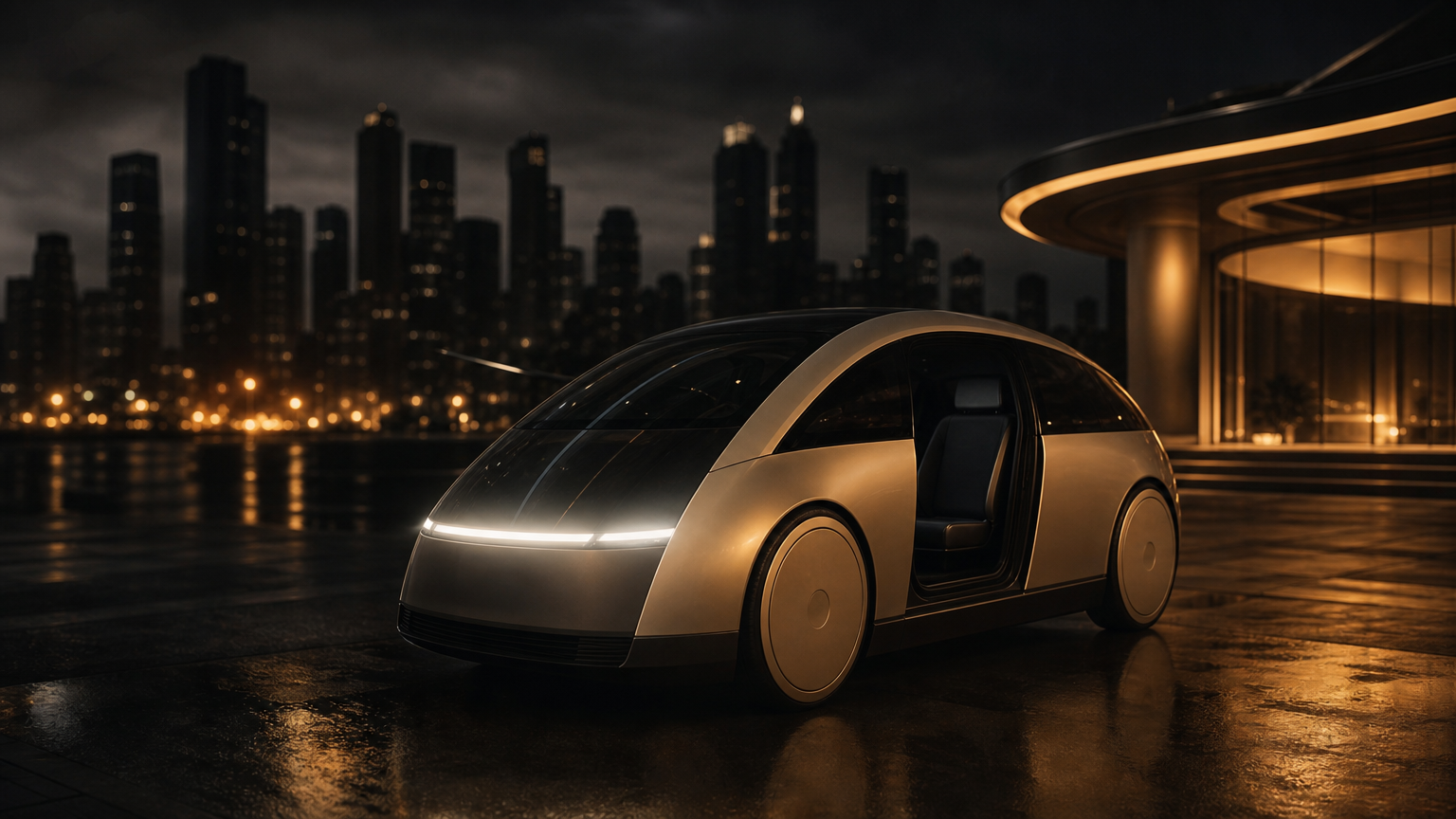
The missing “cheap Tesla” is now a network problem
For years, the simplest bull case for Tesla was a smaller, cheaper electric car: a mass-market model near $25,000, often called “Model 2” by investors and fans even though Tesla did not officially brand it that way. The current Cybercab push reframes that expectation. The question is no longer only, “Where is the affordable car?” It is, “What if Tesla believes the better $25,000 product is not a privately owned car at all, but a driverless earning asset?”
That distinction matters because Tesla’s latest public signals point toward a robotaxi-first strategy. Cybercab, now on Austin streets in limited service, is a two-seat autonomous vehicle without a steering wheel or pedals, built for ride-hailing rather than traditional ownership . It is also not broadly for sale to consumers; prospective commercial buyers can express interest, but Tesla has not published a final purchase price or complete partner economics .
This is Tesla’s biggest problem: not that the company lacks an affordable-car story, but that it must prove a far more complicated one. A cheap car needs demand, manufacturing efficiency and acceptable margins. A robotaxi platform needs all of that plus regulatory clearance, dispatch software, fleet density, cleaning, charging, repairs, depot real estate, insurance, remote support, customer trust and city-by-city operating permission.
Cybercab is the Model 2 argument turned inside out
The frozen premise behind the story is that Tesla has drifted away from a conventional low-cost consumer vehicle and toward autonomous ride-hailing and robotics . Current reporting reinforces that the company is now explaining Cybercab less as another car and more as a business system.
Built In describes Cybercab as a purpose-built autonomous electric vehicle relying on cameras rather than the lidar-and-radar stacks common among rivals, a choice Tesla says helps reduce cost . The same report says the initial Cybercab rollout is limited to 45 registered vehicles in Austin and that Tesla has not given a detailed path from that starting point to the very large production ambitions Elon Musk has previously discussed .
That is the tension. Tesla’s strategic logic is compelling on paper: one low-cost car sold to a household produces one sale, while one low-cost robotaxi could theoretically generate fare revenue all day. But the more the car becomes an income-producing machine, the more Tesla must solve the unglamorous problems that carmakers usually outsource to owners: where the vehicle sleeps, who cleans it, when it charges, who pays for downtime and who absorbs depreciation.
Axios reported on September 9 that Tesla began soliciting interest from people and companies that want to help build its Robotaxi network, including Cybercab fleet purchasing and mobility hubs or infrastructure . The same report noted that Tesla had not disclosed crucial economics such as the Cybercab’s price or how revenue would be shared with fleet owners . In other words, Tesla has shown the outline of an asset-light network, but not yet the contract that would make the network investable.
The Uber comparison is now unavoidable
Tesla’s robotaxi plan is often presented as a direct challenge to Uber and Waymo, but the current shape of the strategy borrows from both. Like Uber, Tesla wants a marketplace in which vehicles meet riders through an app. Unlike Uber, Tesla also manufactures the vehicle and controls the autonomous software. Like Waymo, Tesla wants driverless operation. Unlike Waymo, Tesla appears interested in having outside fleet owners shoulder a meaningful portion of the capital burden.
Forbes framed the new fleet-interest push as a platform model: outside buyers would own Cybercabs, Tesla would earn from manufacturing and then take a share of ride revenue . That structure could reduce Tesla’s need to finance every vehicle itself, but it also transfers risk to fleet owners whose returns depend on Tesla’s software, utilization rates, pricing power and regulatory status .
The early Austin data shows why scale matters. Forbes reported snapshots in which Tesla rides cost more and required longer waits than competing options: a Model Y Robotaxi quote from Montopolis to ACL Live was $19.58 versus $12.96 for an Uber electric vehicle, while a 2.5-mile Cybercab ride was priced at $12.15 with a projected 40-to-50-minute wait, compared with $7.96 and under 10 minutes on Uber . These are not definitive long-term prices, but they reveal the obvious: a scarce robotaxi is not automatically a cheap robotaxi.
MotorTrend’s ride report reached a similar practical conclusion from the passenger side. Across five Austin Cybercab rides totaling 11.5 miles, the publication paid $33.72, or $2.93 per mile on average, while noting that ride-hailing services such as Uber, Lyft and Waymo often vary widely but can be roughly $1 to $2 per mile . MotorTrend also found service limits: Cybercab rides were available only in Austin, avoided freeways and did not go to Austin-Bergstrom airport .
Regulation is not a footnote
The absence of a steering wheel and pedals is central to Cybercab’s cost and design, but it also concentrates regulatory risk. Built In reported that Tesla self-certified Cybercab’s compliance with federal vehicle safety standards, while the National Highway Traffic Safety Administration is investigating whether the vehicles are compliant . Forbes identified the review as NHTSA Audit Query AQ26002 and said the agency is examining the process and technical data Tesla used to certify a vehicle without conventional manual controls .
This is not merely paperwork. If regulators accept Tesla’s pathway, Cybercab can become a template for faster deployment of purpose-built autonomous vehicles. If regulators require exemptions or additional changes, Tesla’s near-term scaling plan could slow sharply. The vehicle’s entire economic thesis depends on removing human-driver hardware, cutting cost and running many miles with minimal labor. Any mandated redesign or cap would hit exactly the place Tesla is trying to optimize.
The boring bottleneck: parking, power and washing
The second unglamorous constraint is infrastructure. Axios reported that Tesla’s invitation to entrepreneurs is already inspiring businesses around fleet support, including Fleetport, a proposed network of hubs for overnight storage, fast charging, cleaning and basic maintenance for 100 to 250 robotaxis per site . The same report said Fleetport has no Tesla partnership, has not raised institutional capital and has not begun construction, though it has identified potential sites starting in Texas .
That detail gets to the heart of the story. If Tesla’s answer to the missing cheap car is a network of cheap robotaxis, then the product is not just the Cybercab. The product is a distributed operating machine. Cars need to be staged near demand, charged without wasting revenue hours, cleaned between riders, recovered when they get stuck, and maintained at utilization levels private owners never see.
Axios also noted the difficulty of placing robotaxi depots in dense cities because suitable real estate, zoning, permitting, power requirements and empty repositioning miles all affect efficiency . That is why the Model 2 comparison can be misleading. A low-cost consumer car can leave the factory and become the buyer’s logistical problem. A robotaxi remains Tesla’s problem, or the fleet partner’s problem, every day.
Tesla’s real test
Tesla may be right that the best successor to the $25,000-car dream is not a small hatchback but a cheap autonomous vehicle that earns money by the mile. If Cybercab works, Tesla could sell hardware, collect software-like revenue, and attack Uber’s labor-dependent marketplace with a lower-cost machine.
But the burden of proof has shifted. The company must show that the economics improve as the fleet grows; that fares and wait times can fall toward or below incumbent ride-hailing levels; that regulators will accept its self-certification approach; that outside operators will buy Cybercabs without knowing every future platform term; and that depots, charging and maintenance can scale in parallel.
So Tesla’s biggest problem is not simply the absence of Model 2. It is that Cybercab has to be Model 2, Uber driver, fleet operator, charging network, regulatory test case and public-trust campaign all at once. That is a much bigger bet than selling an affordable car — and potentially a much more valuable one if Tesla can make the whole system work.
Sources from the last 72 hours
- [1]Tesla's Biggest Problem (Is Not What You Think)Sep 10, 2026, 5:30 AM UTC
- [2]Tesla’s Cybercab Is Finally Here. Now Comes the Hard Part.Sep 9, 2026, 12:00 AM UTC
- [3]Tesla dangles opportunitySep 9, 2026, 3:58 PM UTC
- [4]Tesla Opens Cybercab Fleet Sales As Regulator Reviews CertificationSep 9, 2026, 12:00 PM UTC
- [5]Tesla Cybercab First Ride: What It’s Really Like to Use Tesla’s New Autonomous TaxiSep 8, 2026, 12:00 AM UTC
- [6]Cybercab fleets would need a place to sleepSep 9, 2026, 4:00 PM UTC
AI-generated article based on recent web research, then preserved as a dated editorial snapshot.
Comments
Be the first to comment.