
Daily Podcast full article
OpenAI and Dell chase AI capacity
OpenAI’s Malaysia capacity deal with Nvidia-backed Firmus and Dell’s forecast that AI could account for 75% of datacenter demand by 2030 point to the same market reality: frontier AI is becoming a race for power, land, cooling, networking and reliable geographic access, not just a contest over model quality.
A capacity deal, not just another cloud contract
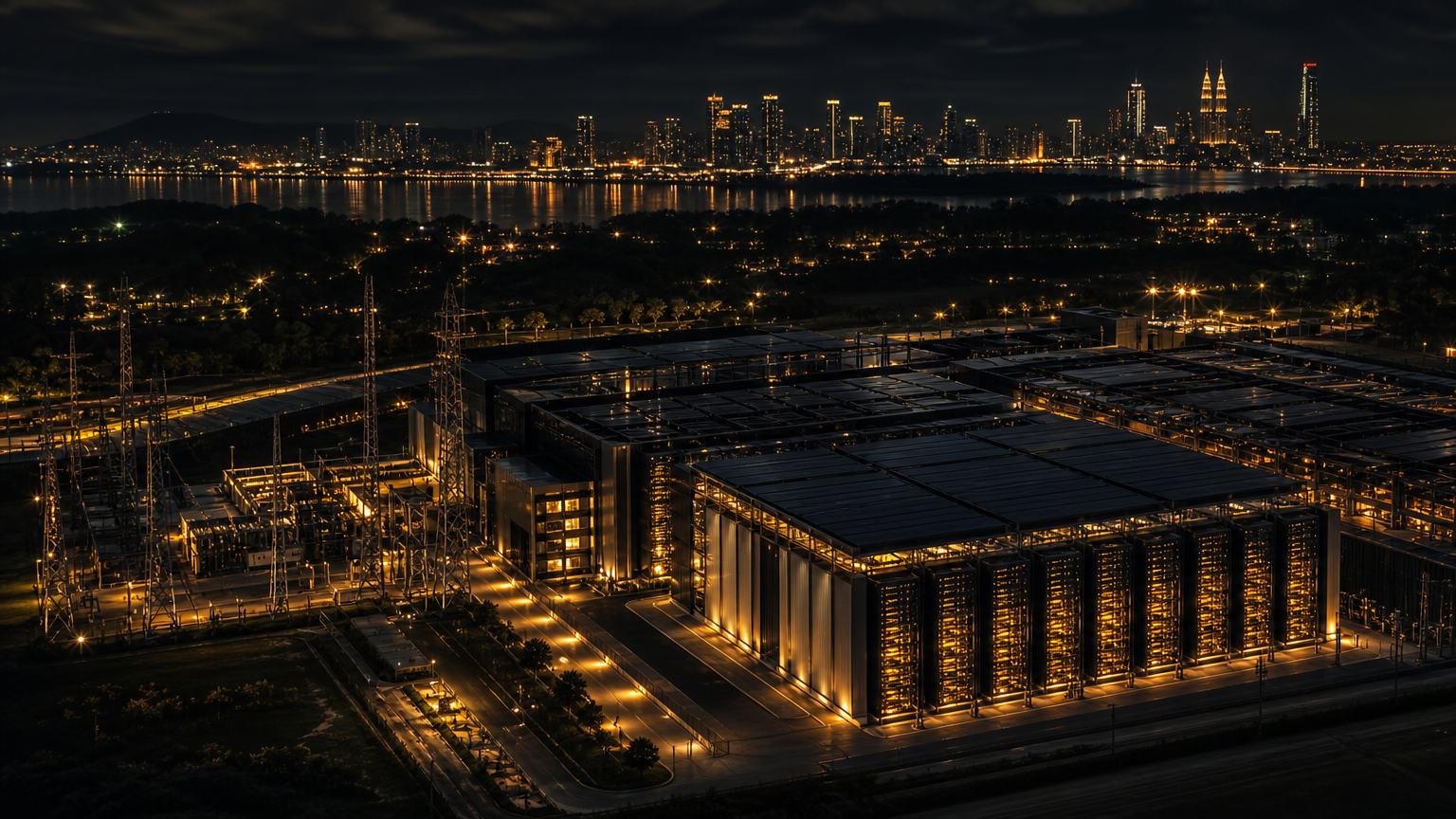
OpenAI’s new partnership with Firmus turns Malaysia into another node in the global buildout behind advanced AI. Firmus said on September 8, 2026, that OpenAI will contract dedicated AI compute capacity from two Firmus AI Factory sites in Malaysia under a multi-year strategic partnership . Reuters reported the same arrangement as a deal for computing capacity from two Malaysian data centres, with OpenAI becoming an anchor customer as infrastructure demand rises for advanced AI models .
The importance of the agreement is less about a single country announcement than about what it reveals. OpenAI is not merely renting generic server space. It is securing dedicated capacity in a region where energy access, permitting, networking routes and proximity to users are all becoming strategic variables. Firmus said the partnership lifts its total contracted capacity across customers to more than 900 megawatts . Reuters separately reported that Firmus declined to comment on the value of the OpenAI contract, while OpenAI did not immediately respond to a Reuters request for comment .
For OpenAI, the Malaysian sites extend a pattern: the company needs more compute to serve product demand, but compute increasingly comes bundled with location, power availability and a specialist infrastructure partner. In a statement included by Firmus, Sachin Katti, OpenAI’s vice president of compute strategy, said the Malaysian data centers would help serve growing demand for OpenAI’s products across the region and around the world . That framing matters. It casts Malaysia not as a back-office hosting market but as part of the production map for AI services.
Firmus makes the “AI factory” pitch
Firmus is positioning the deal inside a broader Asia-Pacific platform. The company said its portfolio spans seven AI factories across Australia, Singapore, Indonesia and Malaysia, with two sites operational in Australia and Singapore and five under development for ready-for-service over the next 24 months . Business Today Malaysia also reported that the company operates two AI data centres in Australia and Singapore, with five more under development across Asia-Pacific .
The technical stack is central to the story. Firmus said it will deploy Nvidia Vera Rubin at scale across Asia-Pacific and use Nvidia’s DSX AI Factory Platform to integrate Vera Rubin NVL72 rack-scale systems with its own HyperCube platform . Firmus describes HyperCube as combining liquid cooling, mechanical systems and electrification into a repeatable infrastructure system manufactured and prefabricated in regional New South Wales . Reuters also reported that Firmus will deploy Nvidia’s next-generation Vera Rubin processors at scale across Asia-Pacific .
This is why Nvidia’s role matters even where it is not the direct customer. Reuters described Firmus as Nvidia-backed and said the company was valued above $10.5 billion in its last fundraising, with backers including Nvidia, Jane Street, Blackstone funds and Coatue Management . Business Today Malaysia carried the same valuation and investor context . The result is a vertically connected ecosystem: GPU vendors, infrastructure builders, cloud buyers and AI labs are increasingly tied together through financing, hardware road maps and long-term capacity commitments.
The language of “AI factories” also signals a shift in how the sector thinks about datacenters. A conventional datacenter is measured in racks, power usage and uptime. An AI factory is measured in how efficiently it turns electricity, GPUs, cooling and networking into tokens. Firmus explicitly framed its infrastructure around “energy in and tokens out,” and said bringing more of the value chain together is expected to improve deployment speed, capital efficiency and operating performance . For AI buyers, that means procurement is no longer only about whether a vendor has GPUs; it is about whether that vendor can deliver usable, networked and cooled compute at industrial scale.
Dell puts a number on the buildout
Dell’s latest infrastructure framing gives the OpenAI-Firmus deal a wider market context. The Next Platform reported on September 7, 2026, that Dell expects AI to account for 75% of all datacenter demand by 2030, adding 200 gigawatts of power over the same period . The publication attributed the comments to Dell’s leadership, which also described enterprise agentic AI as becoming the single largest workload by 2028 and projected rapid growth in inference tokens by 2030 .
Those numbers are planning signals. A 75% share of datacenter demand would mean AI is no longer an exotic high-density workload living beside ordinary enterprise computing. It would become the workload around which many facilities, power contracts and supply chains are designed. The 200-gigawatt figure is equally striking because it shifts the conversation from chips to grid-scale energy. If operators, utilities and governments take that forecast seriously, the bottleneck is not just semiconductor supply. It is substation capacity, transmission planning, water policy, cooling design and the ability to place compute where it can be powered and connected.
Dell’s view also helps explain why OpenAI’s Malaysia agreement is strategically meaningful even without a disclosed contract value. The deal gives OpenAI a regional foothold, gives Firmus an anchor customer, and gives Nvidia-backed infrastructure a demand signal for next-generation systems. In the same moment, Dell is telling the market that AI could dominate datacenter demand within four years . Together, those developments suggest that capacity commitments may increasingly be signed before full demand is visible, because waiting could mean losing access to power, sites or GPU allocations.
Why Malaysia matters
Malaysia’s appeal is not accidental. Reuters described Malaysia as Southeast Asia’s fastest-growing data centre market, while noting that rapid buildout has drawn scrutiny over electricity and water use . Business Today Malaysia likewise reported that Malaysia’s growth as a data centre market is tied to demand for infrastructure to run increasingly advanced AI models, while concerns over electricity and water consumption are rising .
That trade-off is now central to AI infrastructure politics. Countries want investment, jobs, digital sovereignty and a place in the AI supply chain. Communities and regulators want assurance that new campuses will not overwhelm grids, strain water supplies or crowd out other industrial uses. For Malaysia, OpenAI’s arrival through Firmus strengthens the country’s status as a regional capacity hub. But it also makes the country part of the wider debate over who benefits from AI infrastructure and who bears the resource cost.
Geography also affects latency, resilience and market access. OpenAI’s products serve global users, but capacity cannot be concentrated indefinitely in a handful of U.S. or European mega-campuses. Regional capacity can reduce dependence on distant hubs, diversify operational risk and support customers whose workloads or regulations favor local or regional processing. The Firmus deal is therefore both a compute purchase and a geographic hedge.
The buyer signal: availability may rival model quality
For cloud buyers and enterprise AI customers, the message is increasingly clear: the best model matters, but access to dependable capacity may matter nearly as much. If AI demand is on track to consume most datacenter growth by 2030, customers will ask harder questions about where their workloads run, how quickly capacity can scale, how resilient the provider’s supply chain is and whether power constraints could affect service availability .
OpenAI and Dell are approaching the same constraint from different sides. OpenAI is securing dedicated compute from a Nvidia-backed infrastructure company in Malaysia. Dell is quantifying the size of the AI demand wave for the hardware and datacenter ecosystem. Firmus is presenting itself as the industrial layer between chips and models. Nvidia’s presence in the story shows how accelerator road maps and facility design are becoming interdependent.
The immediate headline is a Malaysian datacenter capacity deal. The larger story is that frontier AI is becoming a global infrastructure race. The winners may be the companies that can combine advanced models with reliable access to power, land, cooling, networking and deployment partners. In that race, capacity is no longer a background utility. It is becoming a product feature, a strategic moat and a geopolitical asset.
Sources from the last 72 hours
- [1]Firmus surpasses 900 MW contracted capacity, adds OpenAI as anchor customer and expands into MalaysiaSep 7, 2026, 2:00 PM UTC
- [2]Nvidia-backed Firmus signs deal with OpenAI for Malaysia data centre capacitySep 7, 2026, 9:40 PM UTC
- [3]Dell Says AI Will Drive 75 Percent Of Datacenter Demand By 2030Sep 7, 2026, 11:32 PM UTC
- [4]OpenAI Secures Malaysian Data Centre Capacity From Nvidia-Backed FirmusSep 7, 2026, 4:00 PM UTC
AI-generated article based on recent web research, then preserved as a dated editorial snapshot.
Comments
Be the first to comment.