
Daily Podcast full article
SpaceX IPO could crown Musk as investors test the trillionaire trade
SpaceX’s public listing has turned Elon Musk’s paper fortune into the headline, but the more durable story is the market’s attempt to price a company that fuses reusable rockets, Starlink connectivity, government space work, artificial intelligence ambitions and a new class of newly liquid employees and investors.
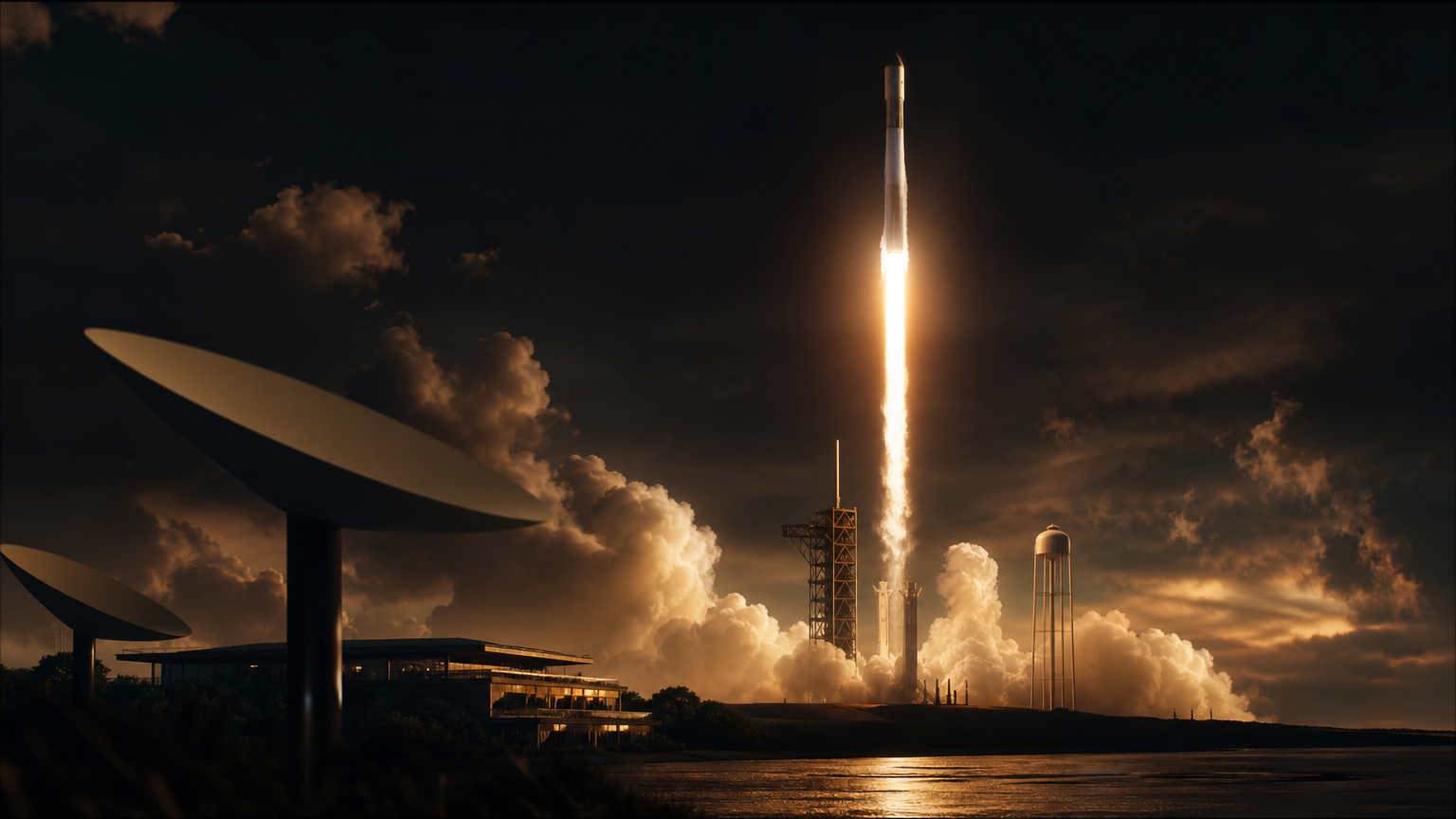
The headline is Musk. The test is SpaceX.
SpaceX’s IPO has done what few listings ever do: it has made the founder’s personal fortune part of the market thesis. In the latest post-listing coverage, the company is already trading as a public, Musk-linked bellwether, with SpaceX shares reported up 7% to $150.84 on September 3 as investors positioned ahead of the next Starship test window . That move does not simply show enthusiasm for a rocket launch. It shows that public investors are now treating SpaceX as a live proxy for the entire Musk industrial system: rockets, satellites, AI infrastructure, Tesla-adjacent manufacturing and the promise that high-risk engineering can become platform economics.
The wealth milestone is unavoidable. SpaceX’s historic June debut valued the company at $1.77 trillion at the IPO and its share price surged by 50% in the first three trading days, according to fresh market commentary this week . That kind of valuation is enough to make Elon Musk the world’s first trillionaire on paper, depending on the mark used for his SpaceX stake and the day-to-day value of his other holdings. But “on paper” matters. SpaceX shares can move, Tesla shares can move, and the public market now updates Musk’s net worth continuously rather than through private-company estimates.
The harder question is not whether Musk can wear the trillionaire label. It is whether SpaceX can grow into the valuation that produced it.
A vertically integrated space company, not just a rocket maker
The reason the IPO matters is that SpaceX is not being valued like a traditional aerospace contractor. Investors are being asked to underwrite a vertically integrated space platform. The company builds and launches reusable rockets, operates the Starlink broadband network, serves commercial and government customers, and increasingly presents space infrastructure as tied to the AI economy . That mix is rare in public markets. Most listed aerospace companies sell aircraft, defense systems, launch services or satellite components. SpaceX offers investors exposure to the full stack: manufacturing, launch, orbital assets, connectivity and software-driven services.
That is the bullish case. If reusable rockets lower the cost of orbit, SpaceX can launch more Starlink satellites, add capacity, sell broadband and government connectivity, and potentially create new infrastructure businesses that depend on cheap access to space. In that framing, the rocket is not merely the product. It is the logistics layer for every other business line.
The same integration creates the risk. A delay in Starship, weaker Starlink economics, regulatory constraints, defense-contract scrutiny or a broader market reassessment of AI-linked infrastructure could all pressure the same valuation at once. The IPO gives public investors access to a space company at global scale, but it also gives them exposure to a bundle of capital-intensive ambitions that need to succeed together.
Why the September move matters
The latest trading action suggests investors are still willing to buy the narrative when there is an engineering catalyst. On September 3, 24/7 Wall St. reported that SpaceX was leading a narrow rally as investors looked toward Starship test 14; Tesla also jumped, while Rocket Lab moved only slightly and the broader space ETF barely rose . That distinction is important. The market was not simply rotating into “space.” It was concentrating capital in Musk-linked names.
For SpaceX bulls, that concentration is proof of confidence. Investors appear to believe that Starship progress, Starlink scale and Musk’s ability to attract capital remain differentiating advantages. For skeptics, the same trading pattern looks like key-person risk in market form. If a stock rises because it is part of the Musk ecosystem rather than because the whole space sector is being repriced, shareholders are buying a founder premium as much as a business.
That premium can be powerful. Tesla showed that markets can sustain aggressive valuations when investors believe a company is defining a future category. But public ownership also changes the rhythm. Every test flight, regulatory filing, launch failure, subscriber milestone, defense award and capital-spending update can now be translated into the share price.
Starlink is the bridge between rockets and revenue
Starlink remains central to the valuation debate because it turns launch capability into a recurring-service business. MoneyWeek’s latest analysis notes that SpaceX’s IPO opened public-market access to a company increasingly seen at the intersection of space and AI, with satellite connectivity still one of the major pillars of the story . For investors, the attraction is clear: broadband customers, enterprise links, aviation and maritime service, and government connectivity create a more familiar revenue model than one-off launch contracts.
The challenge is that satellite broadband is not a monopoly. It requires constant capital spending, spectrum management, ground equipment, international approvals and replacement satellites. SpaceX has an advantage because it can launch its own constellation, but it still has to prove that scale produces durable margins. Public investors will want to see whether Starlink can support the valuation or whether the company needs more speculative businesses, such as AI infrastructure, to justify the multiple.
That is where the IPO becomes a market experiment. Investors are no longer buying only the romance of reusable rockets. They are buying a financial structure that must convert engineering dominance into cash flow.
The real estate ripple: liquidity becomes land
The SpaceX IPO story is already spreading beyond Wall Street. HousingWire’s September 3 column argues that the biggest real-estate impact may not be in Silicon Valley, but in luxury ranch, vineyard and coastal markets where scarce properties can be moved by a relatively small number of newly liquid buyers . The piece says the IPO minted more than 4,400 employee millionaires, including around 400 holders of stakes worth more than $100 million .
That is an important secondary effect. IPO wealth does not stay abstract forever. After lockup periods, tax planning and portfolio decisions, some newly liquid employees and early investors typically convert paper gains into houses, land, philanthropy, private investments and lifestyle assets. HousingWire’s argument is that California’s Central Coast, Santa Ynez Valley, Paso Robles-area ranchland and coastal acreage could see pressure because the supply of trophy land is finite .
This does not mean every SpaceX employee becomes a luxury buyer. It means that a very small number of buyers can affect thin high-end markets. A handful of cash-rich purchasers seeking privacy, acreage and optionality can change pricing in places where the best properties rarely trade.
The public now owns the SpaceX question
Before the IPO, SpaceX’s valuation was debated through private rounds, tender offers and analyst estimates. Now the market votes every trading day. That changes the story. Musk’s trillionaire status becomes less a single coronation than a fluctuating public-market calculation. SpaceX’s share price can lift him above the threshold, push him below it, or widen the gap dramatically.
For investors, the listing offers something genuinely unusual: direct exposure to reusable rockets, global satellite broadband and the industrialization of orbit. It also asks them to accept unusual complexity. SpaceX is a launch company, a broadband provider, a defense contractor, a spacecraft manufacturer and, increasingly, a participant in the AI-infrastructure race.
That is why the IPO could crown Musk, but it also crowns a market question: how much is the infrastructure of space worth when it is no longer a private bet? The first answer was spectacular. The lasting answer will depend on execution, margins, regulation and whether Starship and Starlink can turn the world’s most ambitious aerospace story into a durable public company.
Sources from the last 72 hours
- [1]SpaceX Rises 7% as Starship Test 14 Approaches, Tesla Jumps 7%, Rocket Lab Ticks Up - 24/7 Wall St.Sep 3, 2026, 5:03 PM UTC
- [2]The biggest impact of the SpaceX IPO won’t be in Silicon ValleySep 3, 2026, 7:58 PM UTC
- [3]AI and space: two themes increasingly connected for investorsSep 2, 2026, 1:58 PM UTC
AI-generated article based on recent web research, then preserved as a dated editorial snapshot.
Comments
Be the first to comment.