
Daily Podcast full article
Autonomous breast AI wins approval
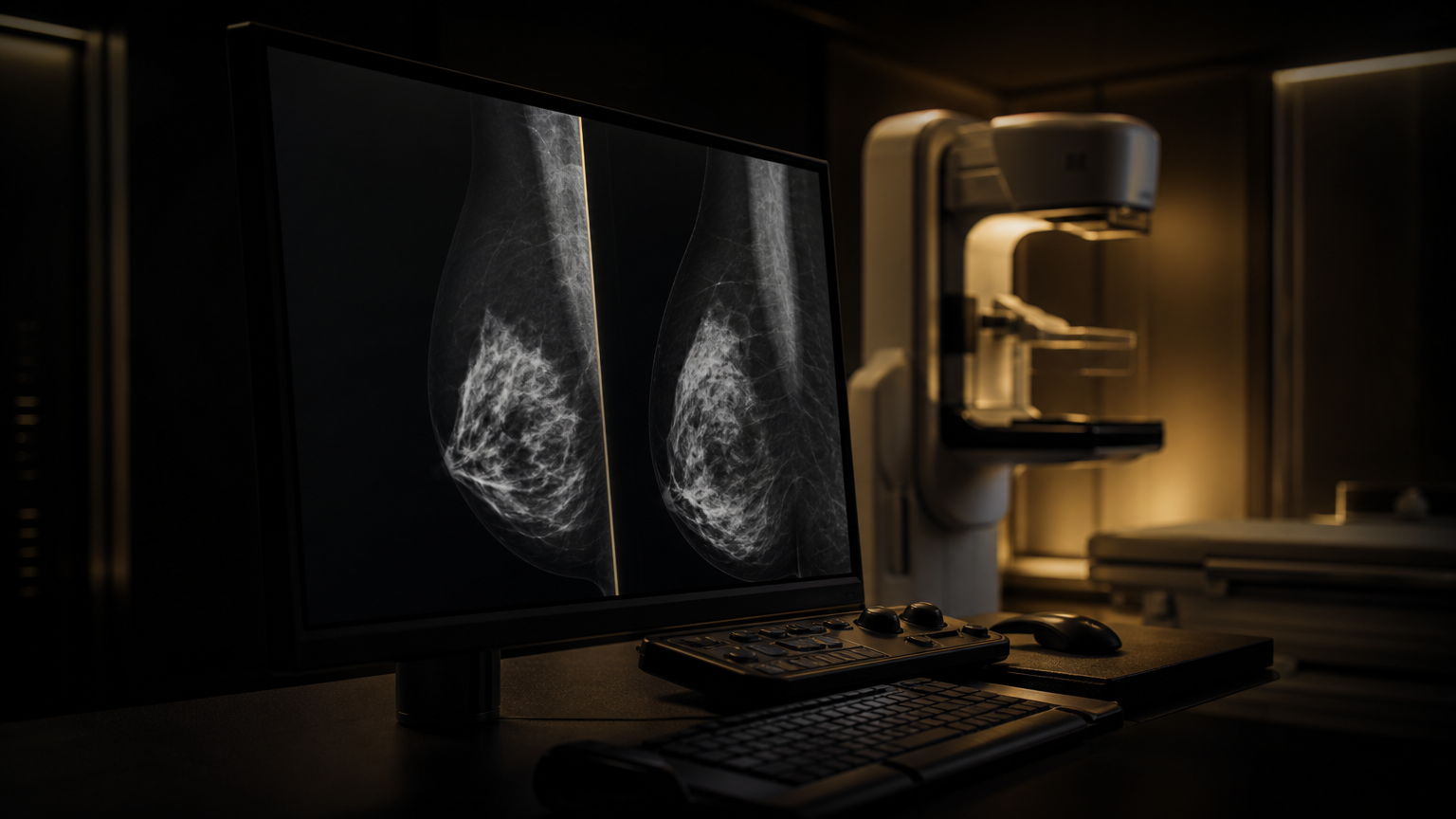
Vara’s CE certification for autonomous breast-screening triage marks a new threshold for medical AI: in defined organised-screening cases, software can now report clearly normal mammograms without a radiologist reading them, while other exams still go to human review.
A regulatory line has been crossed
A Berlin medical-imaging company, Vara, has received CE certification under the European Union Medical Device Regulation for an autonomous breast-cancer screening triage system, described by the company and specialist radiology outlets as the first breast AI certified to report some screening exams as normal without radiologist review . The certification is for a Class IIb medical device and applies to organised population breast-screening programmes, not to every breast-imaging situation or symptomatic diagnostic work .
The practical change is narrow but significant. In Vara’s autonomous-triage mode, mammograms that the system classifies as clearly normal can be reported by the AI without a radiologist reading them; all other exams continue to be read by at least one radiologist . That distinction matters because most imaging AI used in clinical practice has been assistive: it flags suspicious areas, assigns risk scores, prioritises worklists or supports a radiologist’s interpretation. This approval moves one branch of the workflow from “AI advises” to “AI closes the case” .
Why breast screening is the test case
Breast screening is high volume, repetitive and clinically sensitive. European organised programmes commonly rely on double reading, meaning two human readers assess each mammogram, even though Vara says around 97% of screening mammograms are normal . That creates a workload problem in systems already facing radiologist shortages and screening-age expansions .
The appeal of autonomous triage is therefore not that AI replaces breast radiologists across the board. It is that AI could remove a subset of obviously normal exams from the queue, freeing specialists to spend more time on suspicious, ambiguous or urgent cases. Vara says more than half of Germany’s organised breast-screening programme already runs on its software, processing more than 250,000 screenings per month . That installed footprint helps explain why the company frames the approval as a workflow milestone rather than merely a product launch .
What “autonomous” means here
Vara’s announcement uses “autonomous” in a precise way. The system does not autonomously diagnose all cancers. It does not clear every mammogram. It does not remove human review from cases that fall outside its “clearly normal” category. Instead, it autonomously reports only the exams it classifies as normal within organised screening; everything else is sent onward to at least one radiologist .
That makes the regulatory step sharper. Earlier computer-aided detection tools marked regions for doctors to inspect, while newer deep-learning systems often offer suspicion scores or decision support alongside the reader . Vara’s latest certification covers a different operating mode: for a defined low-risk subset, the software is allowed to act in place of a radiologist, not merely beside one .
Specialist coverage also notes the boundary conditions. The Next Web reported that the mode covers organised population screening only, not symptomatic patients or diagnostic work . Radiology Business similarly reported that Vara’s technology is not yet available in the United States and that the company is currently focused on the EU .
The safety layer is the product
Vara and its executives are putting unusual emphasis on the monitoring system around the model. The company calls it ATMON, short for Autonomous-Triage Monitoring . According to the announcement, ATMON sets and monitors each screening site’s operating point, tracks mammography hardware changes, system health and daily performance signals, and reverts a site to full radiologist reading when signals move outside defined limits .
That is central to the approval story because medical AI systems can drift after deployment. A model that performs well in a study can encounter new scanners, changed workflows, different patient populations or altered screening eligibility rules in real practice. Vara CEO Jonas Muff argued that the benefit of AI depends on detecting such shifts when they happen, not merely proving performance once under study conditions .
Vara’s CTO and co-founder Stefan Bunk said the certification was based not on the AI model alone, but on seven years of continuous monitoring of real-world performance across every case . AuntMinnieEurope reported the same point, describing ATMON as central to the certification and noting that Vara plans to make the monitoring layer available to existing and new customers whether or not they adopt autonomous triage .
Evidence, and the limits of the evidence
The approval is tied to Vara’s real-world breast-screening evidence base, especially PRAIM, described in the company announcement as a large prospective AI screening study conducted across 461,818 women without exclusion criteria . AuntMinnieEurope likewise reported that the certification follows the PRAIM study in Nature Medicine, involving 461,818 women . Radiology Business reported that the prior study found Vara’s AI tools could increase breast-cancer detection by nearly 20% across roughly 462,000 women at 12 German sites .
But there is an important caution. The Next Web noted that PRAIM tested AI-supported double reading, not the exact autonomous-triage mode now certified . That does not negate the CE certification, but it does define the adoption question for health systems: regulators have accepted the package of model performance, monitoring and safety controls, while screening programmes will still need to decide how quickly and under what local rules to use a workflow in which no human reads clearly normal cases .
This is why the milestone is as much operational as technological. Hospitals and public screening programmes will need protocols for threshold setting, exception handling, audit, communication with patients, liability allocation and reimbursement. A normal result signed off by AI may be efficient, but it also requires confidence that the residual risk is extremely low and that performance remains stable site by site.
Europe first, but not Europe overnight
Vara says autonomous triage is now available to screening programmes across Europe, but rollout depends on national guidelines and each country’s clinical readiness . The company’s own chief executive wrote that screening programmes will not adopt autonomous triage in clinical practice “tomorrow” and are not meant to do so immediately . That measured framing is notable: the certification creates a category and a regulatory precedent, but implementation will be gradual.
The Next Web also flagged a related regulatory nuance: Vara’s press release says the EU AI Act will require continuous human oversight for high-risk systems, while obligations for MDR-regulated AI medical devices are on a slower timetable . In practice, that means ATMON is being presented not just as a current safety feature but as a template for the kind of post-market supervision autonomous clinical AI will increasingly need .
The bigger meaning for medical AI
The approval’s importance lies in the phrase “without radiologist review.” Many AI tools claim to save time; far fewer are authorised to remove a human read from a clinical pathway. In breast imaging, where a missed cancer has obvious human, legal and reputational consequences, that step raises the bar for evidence and oversight.
If the system performs as intended, the benefit could be substantial: fewer normal exams consuming specialist time, faster attention to cases that need expertise, and a more sustainable screening workforce. If it performs inconsistently, the risks are equally clear: delayed cancer detection, overreliance on automation and difficult questions about responsibility.
For now, Vara’s CE mark does not end that debate. It begins a more concrete one. Regulators have allowed autonomous breast-screening triage into the European market; screening programmes must now decide where it fits, how tightly it should be monitored, and how much autonomy patients and clinicians are prepared to accept in a domain where trust is inseparable from safety.
Sources from the last 72 hours
- [1]Vara Receives World-First CE Certification for Autonomous AI in Breast Cancer ScreeningSep 2, 2026, 6:00 AM UTC
- [2]Vara wins world’s first CE mark for AI that clears mammograms aloneSep 3, 2026, 8:36 AM UTC
- [3]Vara nets CE certification for autonomous breast screening AI triageSep 3, 2026, 12:00 AM UTC
- [4]Behind the world's first autonomous AI for breast imagingSep 2, 2026, 12:00 AM UTC
- [5]AI company scores world’s 1st approval for breast triage tool that skips radiologist reviewSep 3, 2026, 12:00 AM UTC
AI-generated article based on recent web research, then preserved as a dated editorial snapshot.
Comments
Be the first to comment.