
Daily Podcast full article
Xanadu sets quantum deadline with 1,000-logical-qubit target
Xanadu has turned a long-range quantum ambition into a dated public roadmap: fault tolerance in 2028–2029, a quantum data-center buildout in 2029–2030, and more than 1,000 logical qubits by 2031. The numbers matter because logical qubits, unlike raw physical qubits, are error-corrected units that can support useful computation if the engineering assumptions hold.
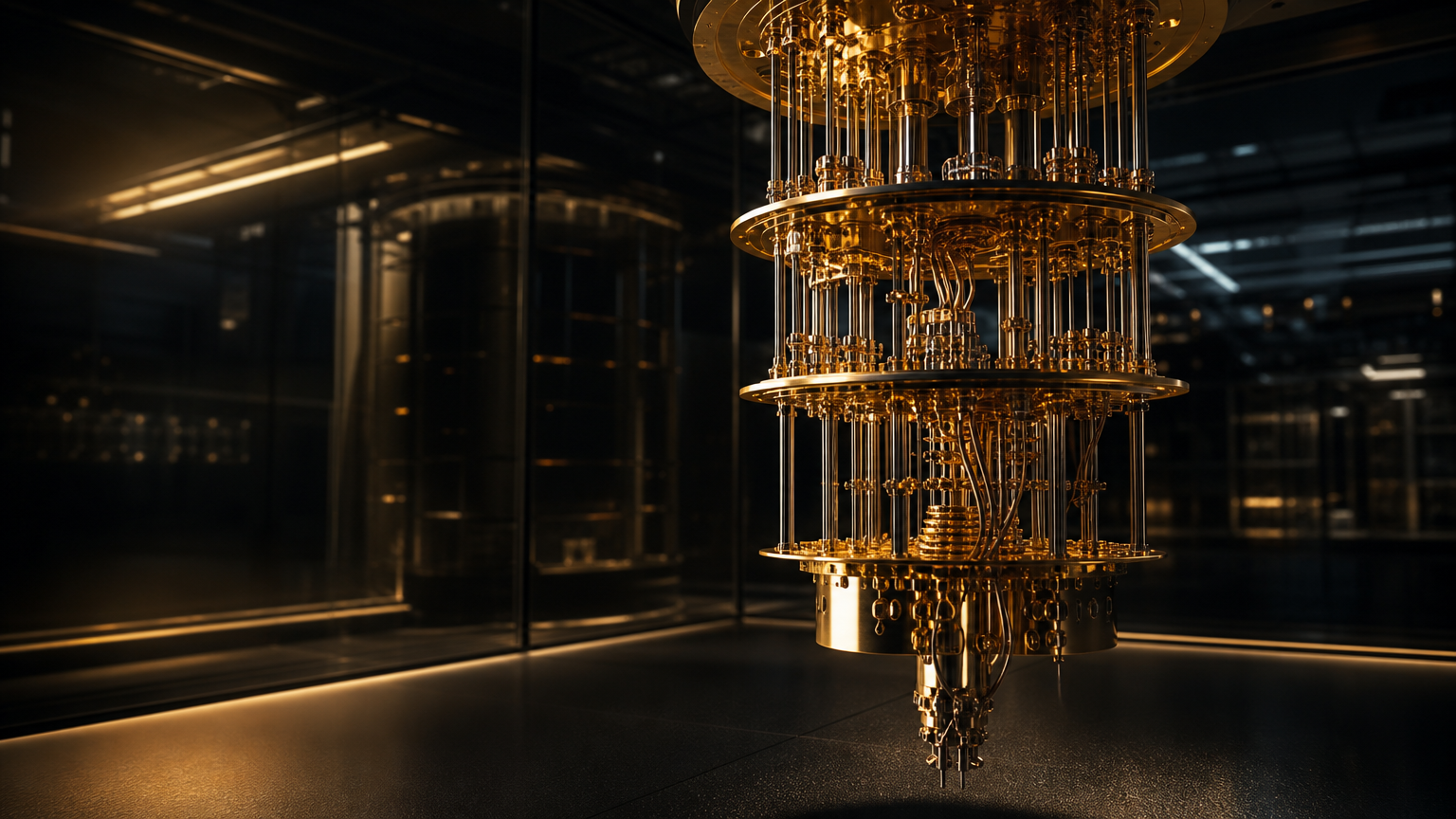
The deadline is now public
Xanadu’s new roadmap puts dates on one of the hardest promises in computing: a move from experimental quantum machines toward fault-tolerant systems that could run long, useful workloads. The Toronto photonic quantum-computing company says it is targeting a fault-tolerance milestone in 2028–2029, a quantum data center in 2029–2030, up to 200 logical qubits by 2029, up to 500 by 2030 and more than 1,000 by 2031 .
That sequence is the core of the announcement. It is not merely another physical-qubit count, the metric that has often dominated quantum marketing. Xanadu is emphasizing logical qubits: error-corrected qubits built from underlying physical resources and intended to survive long enough to execute deeper calculations. The company’s management is explicitly steering attention toward error rates, logical error rates and logical-qubit counts rather than physical-qubit totals alone .
The distinction is critical. Today’s machines can demonstrate impressive experiments, but useful quantum computing generally requires errors to be detected and corrected while computation proceeds. Xanadu is therefore setting a deadline not just for scale, but for reliability. Its public target of more than 1,000 logical qubits by 2031 gives investors, researchers and customers a concrete yardstick against which future demonstrations can be measured .
The technical bet: reduce photon loss
Xanadu’s architecture is photonic: it uses light rather than superconducting circuits or trapped ions as the underlying information carrier. In the company’s framing, the central engineering problem is photon loss, which it describes as the primary source of error in its approach . The roadmap targets a reduction in a key loss indicator from 24.1x in 2026 to 1.0x by 2030 .
That target is the fulcrum of the plan. Xanadu says lower photon loss should allow quantum error correction to work more effectively as the system scales . Its architecture combines Gottesman-Kitaev-Preskill encoding with quantum low-density parity-check codes, a concatenated error-correction strategy designed to suppress logical errors as the physical system improves .
The company is also publishing an aggressive logical-error-rate objective. Xanadu says logical error rates are targeted to move from roughly 10⁻³–10⁻⁸ in 2028 to 10⁻¹⁶ by 2030 . Investing.com’s account of the roadmap reported the same sequence of milestones: fault tolerance in 2028–2029, a quantum data center in 2029–2030, and a scale-up from 200 to 500 to 1,000-plus logical qubits through 2031 .
Founder and CEO Christian Weedbrook framed the remaining task as mainly a matter of materials, fabrication, systems engineering and architecture optimization after progress in the loss ratio . That formulation is important because it presents the roadmap as an execution challenge, not as a claim that all scientific uncertainty has disappeared. Photon loss must still be driven down; the architecture must still cross its relevant error-correction thresholds; and the logical-qubit counts must be demonstrated in working systems rather than in planning materials.
Why logical qubits change the argument
The reason the 1,000-logical-qubit number stands out is that it tries to answer a more meaningful question than “how many qubits are on the chip?” A physical qubit is a fragile quantum component. A logical qubit is an encoded unit protected by error correction. In practice, one logical qubit may require many physical qubits, plus measurement, decoding and control resources.
MarketBeat’s report, distributed by Yahoo Finance, says Xanadu continues to assume an approximately 100-to-1 physical-to-logical-qubit overhead, meaning that around 100 physical qubits would be used to create one error-corrected logical qubit . If that assumption holds, the roadmap implies a system architecture where the headline achievement is not raw device count but efficient conversion of physical capacity into useful logical capacity.
That overhead assumption is one of the most important numbers to watch. If the real overhead is higher, the hardware burden rises. If loss reduction and code performance improve faster than expected, the economics of scaling could look better. Either way, the public roadmap makes the debate more concrete. Xanadu has given the market a dated model: reduce loss, cross fault tolerance, scale logical qubits, then commercialize around the end of the decade.
A data center, not a laboratory demo
Xanadu is also moving the language from “processor” toward “infrastructure.” Its updated plan includes a quantum data center in 2029–2030 . That matters because credible fault tolerance would shift quantum computing from a research showcase to a candidate infrastructure layer for applications such as chemistry, materials simulation, optimization and other workloads that may require very long circuits.
The company says its photonic architecture is designed to operate at room temperature, use silicon manufacturing processes and scale through modular, networked systems compatible with telecom infrastructure . It is also building a 158,000-square-foot Toronto manufacturing facility called Inception to support testing, heterogeneous integration, photonic integrated-circuit packaging and rack-level module assembly .
The factory language is as significant as the qubit language. A 2031 logical-qubit target cannot be reached through a single isolated experiment. It requires repeatable manufacturing, packaging, control and assembly. By placing Inception and the “Qubit Factory” build in the same roadmap as the logical-qubit targets, Xanadu is signaling that its bottleneck is not only quantum theory but industrialization .
PennyLane as the bridge to customers
The roadmap is not hardware-only. Xanadu is using PennyLane, its open-source quantum development platform, as a bridge to developers and potential customers before large-scale hardware is available. The company says PennyLane was used by 30.8% of surveyed developers over the past year, that more than 1,890 public code repositories declare it as a dependency, and that the platform family sees about 1.1 million package installs per month .
The company’s commercial logic is straightforward: if researchers and enterprises learn on PennyLane now, some of them may become users of Xanadu hardware, cloud services, application-development projects or training products later. Chief operating officer Rafal Janik described today’s PennyLane users as potential customers when Xanadu’s hardware comes online .
MarketBeat’s report adds that Xanadu has identified four possible commercialization paths: cloud access to hardware, sales of quantum-computing systems, advanced photonic devices and intellectual-property licensing, and PennyLane commercialization . The company is targeting meaningful end-customer commercialization in 2029 or 2030, aligned with the planned quantum data center .
That timing is ambitious but internally consistent. The roadmap does not promise broad revenue from fault-tolerant systems today. It says the software ecosystem, partnerships and application work are being built ahead of the machine that could make them commercially powerful.
Capital and credibility
Xanadu says it has about US$686 million of total available funding, made up of US$312.8 million in cash and cash equivalents, US$232.8 million of remaining capacity under a synthetic at-the-market equity facility, and about US$140.2 million, or CAD $195 million, in confirmed Government of Canada funding under Project OPTIMISM . Investing.com reported the same funding breakdown in its coverage of the roadmap .
That capital position does not guarantee technical success, but it matters. Fault-tolerant quantum computing is an expensive hardware race, and the companies that survive to 2029–2031 will need capital for facilities, talent, fabrication cycles and system integration. Xanadu’s decision to disclose both the technical milestones and the funding base makes the roadmap easier to audit over time.
The announcement also sharpens competition. By dating fault tolerance and naming a 1,000-logical-qubit target, Xanadu is inviting comparison with roadmaps from larger and better-known quantum players. The comparison will not be settled by press releases. It will be settled by loss metrics, logical error rates, uptime, programmability, developer adoption and the ability to run workloads that classical systems cannot efficiently match.
The milestone to watch
The most important near-term marker is not 2031. It is the 2028–2029 fault-tolerance milestone and the loss-reduction path that must precede it. If Xanadu can show that photon loss is falling toward its stated threshold, and that its concatenated error-correction stack produces improving logical error rates, the later 500- and 1,000-logical-qubit targets become more credible.
If not, the 2031 number will look like an aspirational endpoint rather than a schedule. That is the value of the announcement: it creates accountability. Xanadu has set the clock in public. The next few years will show whether photonics can turn that deadline into infrastructure.
Sources from the last 72 hours
- [1]Xanadu Charts Path to Over 1,000 Logical Qubits by 2031Aug 31, 2026, 11:30 AM UTC
- [2]Xanadu Targets Fault-Tolerant Quantum Computing by 2029, 1,000 Logical Qubits by 2031Sep 1, 2026, 12:02 AM UTC
- [3]Xanadu unveils quantum computing roadmap, targets fault tolerance by 2028-2029Aug 31, 2026, 11:36 AM UTC
AI-generated article based on recent web research, then preserved as a dated editorial snapshot.
Comments
Be the first to comment.