
Daily Podcast full article
Waymo Just Attacked Tesla Before the Cybercab Launch
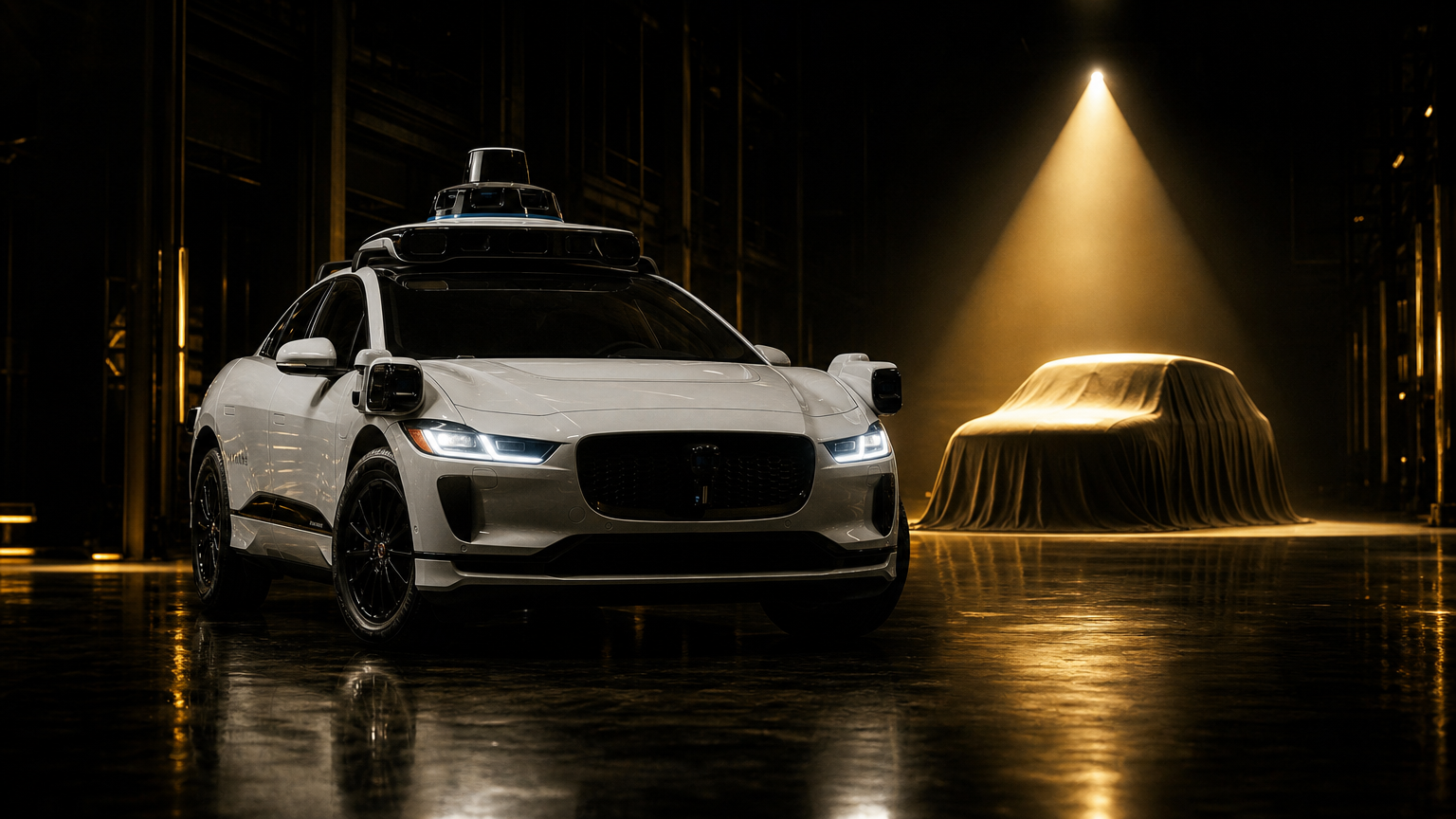
Waymo did not write “Tesla” in its new autonomy manifesto, but the target was hard to miss: cameras alone, end-to-end black boxes, and the idea that a Level 2 driver-assistance system can be climbed into Level 4 robotaxi service. With Tesla’s Cybercab event scheduled for September 3 in Austin, Waymo’s timing turned a technical blog post into a competitive broadside.
The attack that avoided the name
Waymo’s latest public argument was framed as a list of lessons from more than 200 million fully autonomous miles, but the industry read it as something sharper: a direct challenge to Tesla’s robotaxi strategy just days before Tesla’s Cybercab debut . The Verge described the message as a “swipe at Tesla,” noting that Waymo’s top software executive did not directly name Elon Musk or Tesla, while still making the target clear . Electrek reached the same conclusion, calling the post a direct rebuke of Tesla’s self-driving strategy because several of its core claims map closely onto Tesla’s public choices .
The most pointed phrase was “false summit.” Waymo’s argument, as reported by Electrek and EV, is that improving a Level 2 driver-assistance system into full autonomy is not a reliable path to Level 4 robotaxi maturity . That matters because Tesla’s autonomy story has long leaned on a huge base of consumer vehicles running Full Self-Driving under human supervision, with the expectation that enough data, training, and neural-network progress will eventually unlock broad unsupervised autonomy .
Waymo is now saying the opposite. Its message is that there is no substitute for vehicles actually operating without a human fallback, because only driverless miles expose an autonomous system to the full consequences of its decisions . In other words, Waymo is not merely defending lidar or mapping; it is attacking the ladder Tesla says it is climbing.
Why the timing made it a fight
If Waymo had published the same post in a quiet month, it might have looked like an engineering essay. It landed instead in the final stretch before Tesla’s September 3 Cybercab event in Austin, where Tesla is expected to present its purpose-built two-seat robotaxi without a steering wheel or pedals . EV reported that Waymo’s post appeared eight days before that event, sharpening the competitive context .
That timing is the story. Waymo’s argument arrived when Tesla is trying to make Cybercab feel inevitable: not a concept, not another promise, but the next visible step in a commercial robotaxi service. TorqueNews reported on August 29 that Tesla had been amplifying footage of a wheel-less Cybercab in Austin and that Tesla had quote-posted the video with “Less than a week away” . The same report said the launch is scheduled for Thursday, September 3, at Gigafactory Texas, invitation-only and livestreamed .
Waymo’s intervention therefore lands as a prebuttal. Before Tesla can define the Cybercab moment as a breakthrough in camera-based autonomy, Waymo is trying to define the safety test that Tesla must answer. The argument is not just “our system works.” It is “the architecture Tesla chose is insufficient.”
The three technical fault lines
The first fault line is sensing. Waymo’s position, as summarized by The Verge, is that cameras are powerful but not enough for safe fully autonomous operations at scale . Waymo’s stack combines cameras, lidar, and radar to build a redundant view of the world, while Tesla has doubled down on a camera-only “Tesla Vision” approach . EV reported Waymo’s framing in similar terms: lidar supplies three-dimensional geometry, cameras interpret signs and lights, and radar helps in conditions such as rain, fog, and dust .
The second fault line is mapping. Tesla has criticized dependence on high-definition maps, arguing that real roads change and that autonomy should generalize without brittle preloaded detail . Waymo’s answer is subtler than “maps solve everything.” It describes HD maps as a useful prior, another input that acts like memory and frees the car to focus compute on what is dynamic or unexpected . That is a direct philosophical split: Tesla wants autonomy to scale with general AI-like perception; Waymo wants autonomy to scale with layered context and continuous map updates.
The third fault line is system design. Waymo warned against pure end-to-end systems that take raw inputs and output driving commands without enough independent checking . The Verge reported that Waymo emphasizes an independent onboard validation layer, while Electrek noted that this critique lands on Tesla’s recent emphasis on end-to-end neural-network driving . The debate is not whether AI is essential; both companies rely on AI. The debate is whether AI should be trusted as a single opaque driver or constrained by separate safety layers.
Tesla’s counterweight: speed, cost, and scale-up
Tesla’s answer is not theoretical either. EV reported on August 27 that Tesla told riders its Robotaxi service now runs from 6 a.m. to 10 p.m., seven days a week, and that upgraded routing should shorten waits . The same report said Tesla had registered 79 additional Model Y robotaxis in Texas in a single day, bringing its state total to 270 . That is still behind Waymo’s Texas fleet, which EV listed at 736 vehicles, but it shows Tesla is adding capacity ahead of the Cybercab event .
This is why the fight is dangerous for Waymo as well. Tesla is arguing, implicitly and sometimes explicitly, that a cheaper vehicle with fewer sensors and a simpler hardware stack can scale faster once the software is good enough. If Cybercab can operate safely at a lower cost per mile, Waymo’s technical conservatism could start to look expensive rather than prudent.
But Waymo is betting that the public, regulators, and city officials will judge robotaxis by demonstrated safety, not just bill-of-materials efficiency. The Verge reported that Waymo is operating fully autonomous vehicles in 11 cities and conducting 500,000 paid trips a week, while Tesla’s robotaxi deployment remains much smaller and mixed between supervised and increasingly unsupervised operations . Electrek also contrasted Waymo’s weekly ride scale with Tesla’s reported 380,000 unsupervised miles as of the prior month .
The awkward current reality
The competitive backdrop is not clean for either side. Tesla is trying to turn attention toward Cybercab, but recent coverage has highlighted operational rough edges. TorqueNews reported that Tesla’s AI lead had touted more than 380,000 unsupervised robotaxi miles across six cities with “zero notable incidents,” while critics pointed to a filmed Austin ride in which a Tesla robotaxi pushed through plastic bollards . The same article described complaints about long ride estimates, missed pickups, and a drop-off problem inside Tesla’s service area .
Those examples do not prove Tesla’s autonomy approach cannot work. They do, however, explain why Waymo chose this moment to press the safety case. A robotaxi launch is not judged only by whether a vehicle moves without a driver. It is judged by how predictably it handles mundane urban messiness: construction, temporary obstacles, curb geometry, rider routing, emergency interactions, and the long tail of ordinary road weirdness.
Waymo’s own strategy has tradeoffs. Multi-sensor hardware, HD maps, validation layers, and city-by-city deployment are expensive and slow. Tesla’s strategy promises something more explosive: a purpose-built robotaxi produced at automotive scale, guided by a generalized vision system, and improved through fleet learning. The question is whether that promise can meet the safety burden of removing the human fallback.
What September 3 now has to answer
Waymo has raised the bar for Tesla’s Austin event. Tesla can show design, manufacturing, rider experience, and ambition. But after Waymo’s “false summit” attack, the harder questions are about evidence: how many truly unsupervised miles, under what operating conditions, with what disengagement or intervention process, and with what independent safety validation?
The Cybercab debut will not settle the technical war. It will, however, force Tesla to respond to Waymo’s framing. If Tesla shows a controlled showcase, Waymo’s argument that real driverless miles matter most will gain force. If Tesla demonstrates credible expansion, transparent safety data, and a path from small fleets to public service, the pressure shifts back to Waymo’s slower and more expensive model.
For now, Waymo has done something strategically smart. It did not merely criticize Tesla. It defined the exam before Tesla walked into the room. And the exam is brutal: cameras alone, no HD-map dependence, end-to-end AI, and a Level 2 heritage must all prove they can become a safe Level 4 robotaxi business at scale. That is why this was more than a blog post. It was Waymo attacking Tesla at the exact moment Tesla wanted the world to look only at Cybercab.
Sources from the last 72 hours
- [1]Waymo Warns of ‘False Summit’ in Autonomy a Week Before Tesla’s Cybercab LaunchAug 27, 2026, 2:15 PM UTC
- [2]Tesla Is Hyping Cybercab's Austin Launch, But There Is a Drama Online, And It's the Gap Between The Hype and The Current Service's Messy RealityAug 29, 2026, 2:40 PM UTC
- [3]Tesla Adds 79 Model Y Robotaxis in a Day as Texas Fleet Reaches 270Aug 27, 2026, 4:04 PM UTC
- [4]In a swipe at Tesla, Waymo says ‘cameras… aren’t enough’Aug 27, 2026, 2:55 PM UTC
- [5]Waymo takes a shot at Tesla’s self-driving: it’s a ‘false summit’Aug 27, 2026, 1:49 PM UTC
AI-generated article based on recent web research, then preserved as a dated editorial snapshot.
Comments
Be the first to comment.