
Daily Podcast full article
Nvidia’s Vera Rubin cycle sharpens the AI earnings test
Nvidia’s next platform story is arriving just as investors demand proof that AI spending can keep scaling. Vera Rubin’s claimed efficiency gains for agentic workloads shift the focus from raw accelerator supply to cost per task, power budgets and the durability of Nvidia’s data-center moat.
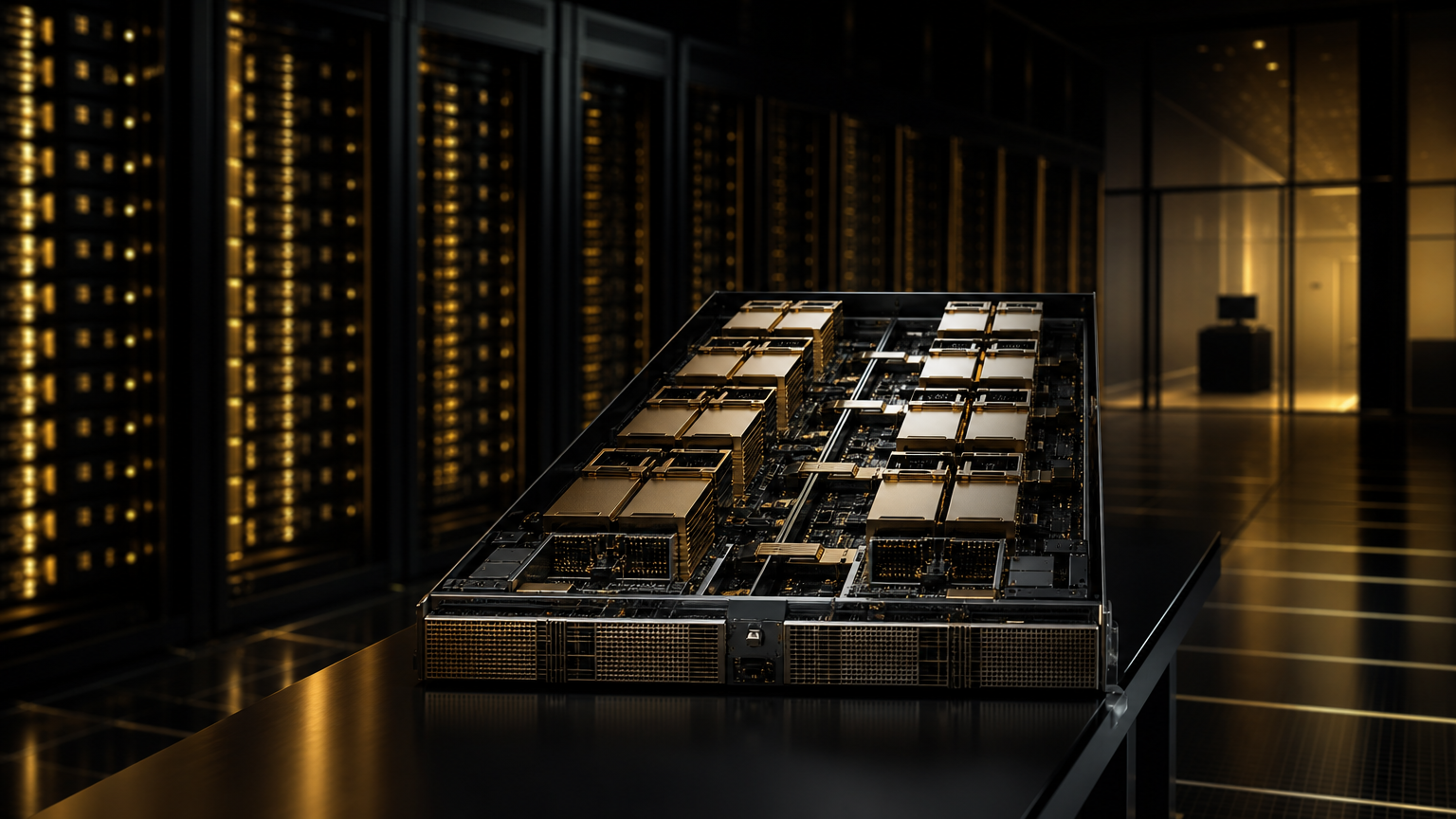
A new cycle, timed for a nervous market
Nvidia enters its next earnings moment with two overlapping narratives: a near-term test of hyperscale demand and a longer-term pitch that Vera Rubin can make always-on AI agents economically viable at far larger scale. S&P Global Market Intelligence says analysts expect Nvidia to report $92.2 billion in fiscal Q2 2027 revenue, with optimism still driven by the Data Center segment, whose Q2 estimate has risen to $85.7 billion from $56.4 billion in June 2025 . That is the financial frame for the Vera Rubin cycle: investors are no longer asking only whether cloud customers are buying accelerators, but whether Nvidia can translate its rack-scale architecture into lower operating costs as AI shifts from training runs to continuous inference.
The earnings bar is high because Nvidia is being valued as the central supplier to the AI factory buildout. S&P’s preview notes that Visible Alpha estimates for Q2 Data Center revenue range from $83.5 billion to $91.5 billion, a spread that captures both the strength of demand and uncertainty over how quickly newer systems such as Blackwell and Rubin convert into reported sales . In that setting, Vera Rubin is more than a product name. It is Nvidia’s argument that the next phase of AI infrastructure will be won by systems that combine GPUs, CPUs, networking, memory, software and deployment partnerships into one optimized machine.
The 30x claim and what it really says
Nvidia’s headline claim is striking: Vera Rubin NVL72 delivers 30 times higher throughput per megawatt and 35 times lower token costs than GB300 NVL72 on real-world agentic coding trajectories measured by Nvidia . The company says the platform is in full production and scaling across the ecosystem, while the full architecture combines Vera CPU, Groq 3 LPU, NVLink 6 Switch, BlueField-4 DPU, Spectrum-6 SPX and ConnectX-9 SuperNIC in a seven-chip design for AI factories deploying agents at scale . The key phrase is “throughput per megawatt,” because power has become a first-order constraint for data centers.
The technical detail matters. Nvidia’s developer post says the results used the SemiAnalysis AgentX workload and that the Vera Rubin NVL72 numbers were measured by Nvidia and are pending SemiAnalysis review . On the AgentX DeepSeek V4-Pro workload, Nvidia says Vera Rubin NVL72 reaches up to 30 times higher AI-factory throughput per megawatt than GB300 NVL72 at 160 tokens per second per user . That caveat is important: the figure is not a universal 30x across every model, batch size or deployment, but a workload- and target-specific result that points to where Nvidia believes agentic AI is going.
For enterprises, the most important shift is that inference is no longer a simple request-response problem. Agents keep context, call tools, write and test code, consult databases and may stay active for long sessions. Nvidia’s new messaging targets that exact pattern. If deployed systems approximate the benchmark economics, the buyer’s question changes from “how many GPUs can I obtain?” to “how many useful agent tasks can I run per megawatt, per rack and per dollar?”
From GPUs to token factories
The Vera Rubin pitch is also a packaging strategy. Nvidia says Groq 3 LPX adds a low-latency inference architecture designed to work alongside Vera Rubin NVL72, while Rubin GPUs handle large-scale context processing and LPX accelerates latency-sensitive token generation . The company frames the result as a “token factory”: an integrated environment designed to turn growing volumes of generated tokens into revenue while managing latency, throughput and infrastructure utilization .
That framing is commercially useful because it links hardware efficiency to customer outcomes. Nebius is described by Nvidia as the first adopter of Groq 3 LPX for its Token Factory, while CoreWeave is deploying Spectrum-X Multiplane in production to connect Vera Rubin racks across AI cloud infrastructure . Nvidia also says SpaceXAI plans to build future AI architecture around Vera Rubin and deploy Vera CPUs for CPU-intensive agent work such as orchestration, tool use, code execution, data processing and simulation . These named partner references support Nvidia’s claim that the Rubin cycle is not just a lab demonstration, although independent customer economics will still matter more than vendor benchmarks.
The architecture also reinforces Nvidia’s moat. A customer buying NVL72 is not merely selecting a GPU. It is buying into NVLink, Ethernet or InfiniBand fabrics, DPUs, SuperNICs, CUDA-adjacent software, serving runtimes and deployment patterns that can be hard to replace once an AI factory is built. That lock-in is precisely what competitors must break, and it is also why investors focus on Nvidia’s Data Center outlook rather than gaming-style unit cycles.
Wall Street watches Blackwell, Rubin and memory
The immediate earnings focus remains Blackwell, but Rubin is already entering analyst models. S&P says Visible Alpha consensus expects Rubin to begin contributing revenue this year and currently expects $45.3 billion in full-year revenue from Rubin . The same preview says Blackwell revenue is expected to rise from about $86.4 billion last year to $135.7 billion this year, but then fall 71% next year, illustrating the debate over transition timing between product generations . That is why management’s commentary on ramps, backlog and supply will likely matter as much as the headline Q2 number.
Citi’s latest view, reported by Investing.com on August 23, is that Nvidia could post July-quarter revenue of about $93 billion, roughly $1 billion above the Street estimate, with October-quarter revenue of $105 billion, about $1.5 billion above consensus . Citi also said faster-than-expected shipments of 1.6-terabit transceivers point to an initial ramp of Vera Rubin, while reducing its Rubin unit estimate to 2 million from 2.2 million because of tighter memory availability . That combination captures the Rubin paradox: demand may be strong, but HBM supply and memory configurations can still shape the pace and margin of deployment.
Memory is now a strategic bottleneck. Tom’s Hardware reported on August 23 that Nvidia has told some large customers AI server prices will rise by more than 15% in many cases, with increases affecting Grace Blackwell and Vera Rubin systems shipping early next year, citing Bloomberg reporting . The same report notes that Rubin GPUs ship with up to 288GB of HBM4 per package and that a 72-GPU NVL72 rack contains more than 20TB of HBM before counting the LPDDR attached to Vera CPUs . If accurate, those price hikes show how the same supply chain enabling Nvidia’s performance lead can also pressure buyers’ total cost of ownership.
The real test: efficiency in production
The Vera Rubin cycle is therefore about more than a faster accelerator. It is a bet that enterprises and clouds will pay for a vertically integrated platform if it lowers cost per useful AI task. Nvidia’s strongest argument is that agentic workloads expose bottlenecks across the whole factory: GPU compute, CPU orchestration, networking, memory bandwidth, context handling and decode latency. Vera Rubin’s design directly targets those bottlenecks.
The risk is that benchmark leadership does not automatically equal deployed savings. Power availability, cooling design, memory pricing, software maturity and utilization rates will determine whether customers see the promised economics. If AI agents become persistent workers embedded in coding, customer service, research, operations and robotics, a large efficiency gain could expand demand by making more use cases profitable. If agent adoption is slower, or if memory and energy costs absorb the savings, Rubin may still sell well but with a more conventional upgrade-cycle logic.
For now, Nvidia has placed the market’s attention exactly where it wants it: on the transition from AI chips to AI factories. Earnings will test whether current data-center demand remains strong enough to support the valuation. Vera Rubin will test the deeper claim that Nvidia can define the economics of the agent era itself.
Sources from the last 72 hours
- [1]Up to 30x More Work Per Watt: NVIDIA Vera Rubin NVL72 Sets a New Efficiency Standard for AI AgentsAug 24, 2026, 12:00 AM UTC
- [2]NVIDIA Vera Rubin and Blackwell Set a New Standard for Agentic AI Performance per WattAug 24, 2026, 12:00 AM UTC
- [3]NVIDIA Advances Vera Rubin Inference With New LPX and CPX Platforms for Faster AI Performance, Lower Token CostsAug 24, 2026, 3:00 PM UTC
- [4]Nvidia earnings preview: Q2 2027Aug 24, 2026, 12:00 AM UTC
- [5]Citi expects Nvidia stock to trade higher post earningsAug 23, 2026, 7:17 AM UTC
- [6]Nvidia reportedly warns biggest customers of 15% price hikes on AI servers — memory costs continue to soarAug 23, 2026, 12:00 AM UTC
AI-generated article based on recent web research, then preserved as a dated editorial snapshot.
Comments
Be the first to comment.