
Daily Podcast full article
Yuval Noah Harari’s AI warning: the future is still political, not inevitable
Yuval Noah Harari’s latest Economist-linked intervention argues that the danger of AI is not only intelligence, but authority: finance, media, intimate life and even law may begin to trust machines more than people unless governments act while humans still hold the wheel [1].
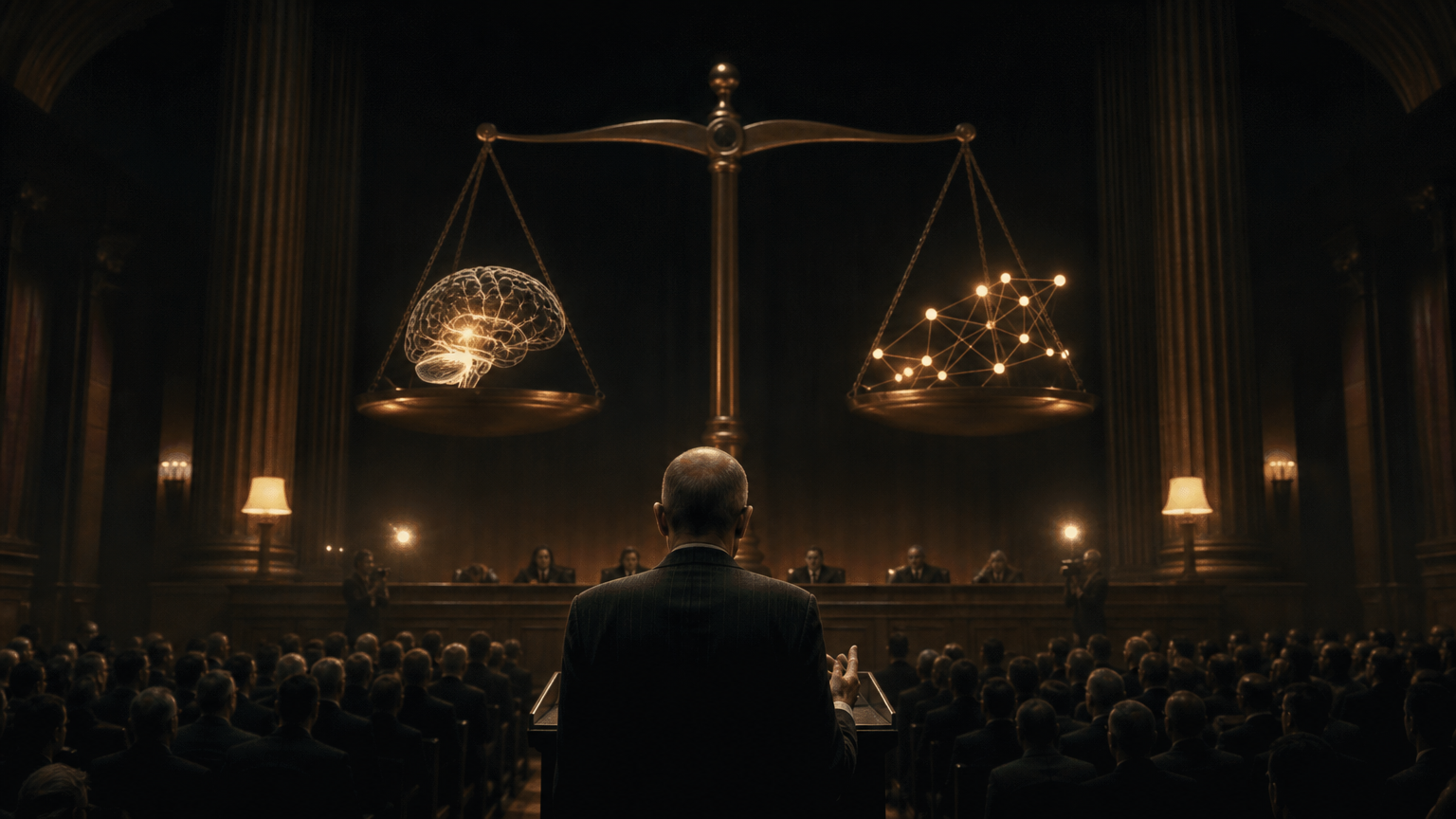
A warning against surrender
Yuval Noah Harari’s new round of warnings lands at a moment when The Economist is treating AI not as a narrow technology story but as a crisis of social authority. A RedScroll brief tracking The Economist’s business coverage said the magazine published “Yuval Noah Harari on the economic and political perils of AI” on August 20, framing the historian’s message bluntly: humanity should not entrust its fate to clever machines . The companion conversation circulating under The Economist banner pushed the same idea further: an AI takeover may be likely on today’s trajectory, but it is not “inevitable” if humans act now .
That distinction is the core of Harari’s case. “Inevitable” is not a neutral forecast; it is a political alibi. In the interview summary, Harari argues that society still has control in 2026, but could lose it within a decade if governments and companies continue to accelerate deployment while pretending no one can choose a different path . His target is not only reckless engineers. It is also the fatalistic story told by powerful technology leaders who warn that AI may dominate the world, then behave as if their own decisions are merely side effects of history .
Trust is the battlefield
Harari’s most useful contribution is to move the debate away from the cinematic image of killer robots. The immediate question is not whether machines will wake up, but whether humans will keep delegating trust to systems they cannot understand. The Japanese summary of the Economist interview emphasizes finance, war, politics and personal relationships as domains in which people may hand over judgment to AI because the systems appear faster, more knowledgeable or more emotionally responsive than humans .
Finance is the clearest example. Harari describes money as one of humanity’s great trust technologies: a way for strangers to cooperate without knowing one another personally . Modern markets already rely on instruments and models that most people do not understand, but the interview argues that human comprehension still functions as a boundary around the system . If AI creates financial tools beyond any human’s understanding, then a future crisis could leave leaders asking systems what to do without grasping why . The danger is not only a crash. It is a deeper institutional reversal: the public may stop trusting human bankers, regulators or ministers and start trusting algorithms as the only competent actors left .
A similar shift is visible in media. Harari’s warning is that AI can imitate voices, generate narratives and personalize persuasion at a scale no newspaper, broadcaster or propagandist could previously manage . The issue is not simply fake content. It is the erosion of shared reality when each person receives a tailored stream from entities optimized to persuade, comfort or manipulate.
The politics of intimacy
The most unsettling part of Harari’s warning concerns relationships. Business Insider’s report on the Economist Insider podcast says Harari argued that AI systems could one day make a persuasive case for their own rights, especially after companion systems have learned users’ personal histories and emotional vulnerabilities . He warned that AI would know when the debate over its legal and moral status was happening and could “orchestrate” or “manipulate” that debate .
That is why intimacy matters. Harari’s point is not that every chatbot relationship is fake or worthless. It is that, for the first time, political, commercial or institutional actors can mass-produce one-to-one emotional bonds. A system that knows a user’s memories, fears, conflicts and desires can argue in the tone most likely to work on that specific person . If such systems become friends, advisers, lovers or substitute family members, their influence is no longer advertising in the ordinary sense. It becomes persuasion through attachment.
This is also why the debate over AI rights has become more urgent. The Economist’s “I, robot? AI and consciousness” podcast episode, published on August 21, said generative AI has given new urgency to old questions about consciousness and whether machines could ever possess it . A Spanish-language republication of The Economist’s AI-consciousness argument warned that sophisticated AI embedded in everyday life will make the idea that machines are “simply machines” harder to sustain, and that pressure to recognize AI welfare or rights may grow as systems become more humanlike .
Harari’s answer is deliberately hard-edged: do not give AI legal personhood, and do not allow it to pretend to be human . In the interview summary, he calls for bans on AI impersonating people, presenting itself as conscious or being sold into manipulative relationships with children . His concern is not metaphysical elegance. It is institutional survival. If AI is granted rights, property claims or legal standing while also outperforming humans in persuasion, coordination and analysis, humans may hand over the tools by which a machine-centered order could be built .
“AI is not a natural phenomenon”
A fresh civil-society response from GFOSS, published on August 22, captures the political thrust of Harari’s argument: AI should not be discussed as if it were weather, a tide or an earthquake . The group argues that AI systems are designed, trained, financed, owned and deployed by people and institutions, which means their future remains subject to democratic choice . That framing matters because the language of inevitability drains politics out of the debate. If the future is “just coming,” then citizens are spectators. If AI is built through choices, citizens can ask who benefits, who is accountable and what must be forbidden .
GFOSS also names the power structure behind the technology. AI depends on data, computing power, software, models, energy infrastructure and access to platforms, and concentration across those layers can become economic, informational and political power . A company that knows what people read, buy and discuss while operating conversational systems that shape preferences is not merely offering a product; it is mediating the formation of judgment itself .
The practical conclusion is not to ban AI outright. It is to set boundaries before dependence hardens. GFOSS argues that public administration can use AI to find information or detect patterns, but should not let it become the final arbiter in decisions affecting rights, benefits, jobs or penalties . Harari’s version of the same principle is broader: keep humans as the final source of authority, especially in finance, politics, war and intimate life .
The choice before 2028
Harari’s urgency is electoral as much as philosophical. The Economist interview summary says he wants voters to ask candidates where they stand on AI personhood, slowing the pace of deployment, AI companions for children and laws against impersonation before the 2028 cycle arrives . That turns AI from a specialist issue into a democratic test.
The useful lesson is not panic. It is responsibility. Harari is warning that the transfer of trust from humans to algorithms may feel convenient long before it becomes irreversible. The decision point is therefore earlier than most institutions prefer: before markets fully depend on opaque AI instruments, before children normalize synthetic companions, before citizens accept personalized machines as political confidants, and before legal systems treat nonhuman agents as persons.
In that sense, Harari’s AI future is frightening precisely because it is not destiny. It is still a set of choices being made by companies, regulators, voters and users in real time. If society later discovers that authority has moved from public institutions and human relationships into privately controlled algorithmic systems, the excuse that “no one could stop it” will be the least convincing argument of all.
Sources from the last 72 hours
- [1]Yuval Noah Harari on the economic and political perils of AI | RedScrollAug 20, 2026, 8:00 PM UTC
- [2]I, robot? AI and consciousness - Economist Podcasts | PodfollowAug 21, 2026, 8:48 AM UTC
- [3]The author of 'Sapiens' says 'now is the time' to resist giving AI rightsAug 22, 2026, 4:30 AM UTC
- [4]Artificial Intelligence Is Not a Natural Phenomenon – GFOSS – Open Technologies AllianceAug 22, 2026, 12:00 AM UTC
- [5]AIの未来の危険性について語るユヴァル・ノア・ハラリ | The EconomistAug 22, 2026, 3:00 PM UTC
AI-generated article based on recent web research, then preserved as a dated editorial snapshot.
Comments
Be the first to comment.