
Daily Podcast full article
Unitree’s record IPO turns China’s humanoid robot hype into a public-market test
Unitree Robotics is set to debut on Shanghai’s STAR Market with one of China’s most watched robotics listings, backed by extraordinary retail demand and a fresh viral “Superman” demo. The harder question is whether the company can turn motion-control spectacle into durable industrial revenue.
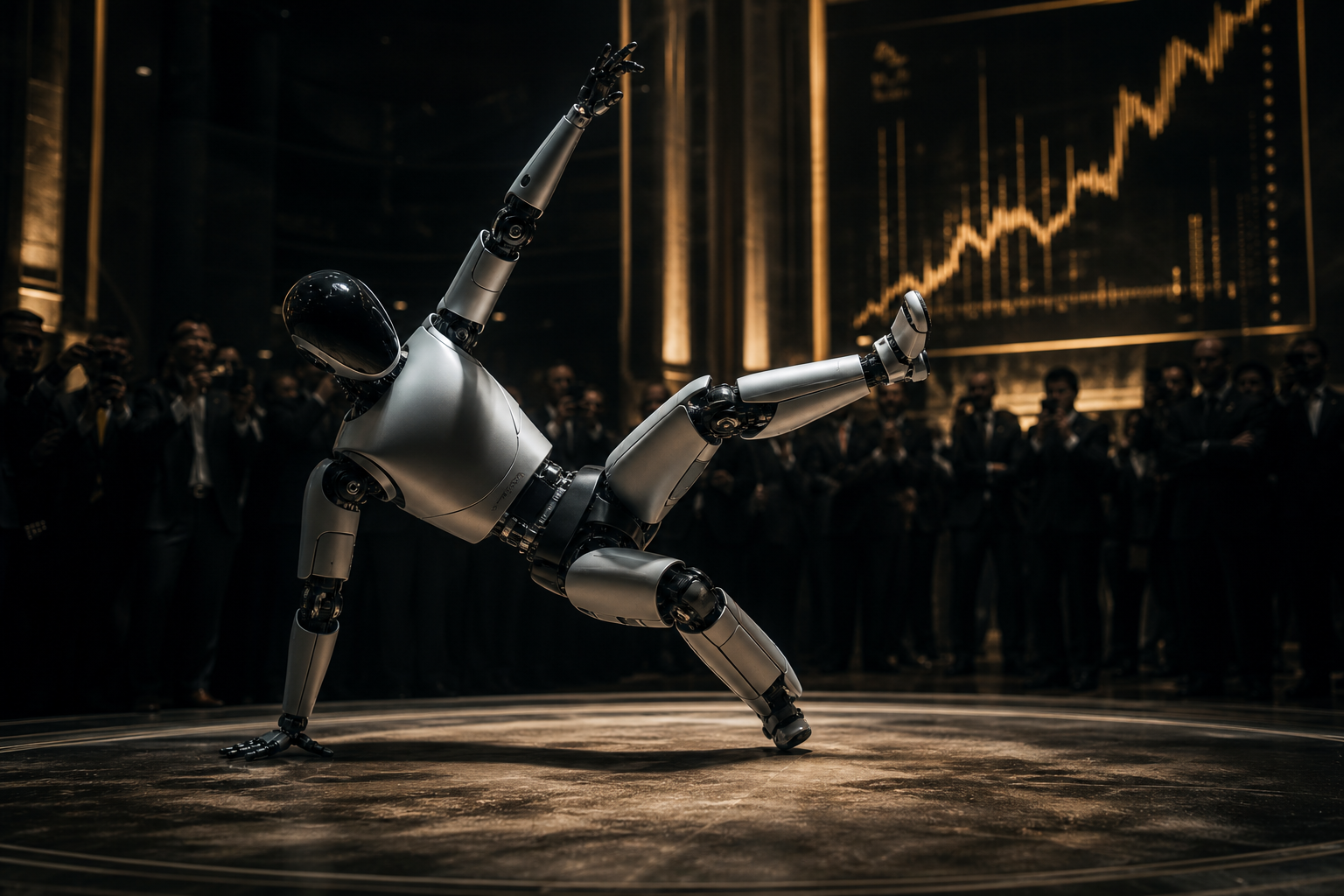
A debut built for the spotlight
Unitree Robotics is approaching its Shanghai market debut with the kind of attention usually reserved for internet platforms or chip champions, not robot makers. Fresh reporting says the Hangzhou company is set to begin trading on the STAR Market on August 19 after raising about 6.1 billion yuan, or roughly $905 million, in an IPO that was reportedly more than 8,000 times oversubscribed. Caliber.Az, citing CNN, described Unitree as the world’s largest humanoid robot maker by sales and said the listing would make it the first humanoid robot maker listed on mainland China.
That combination explains why the deal is being framed as a record moment for China’s humanoid robotics sector. Unitree is not simply selling shares; it is asking public investors to value a young embodied-AI manufacturer as an early infrastructure winner in a market Beijing has identified as strategically important. According to the same fresh report, Unitree’s 2025 revenue rose more than tenfold in two years to nearly 1.7 billion yuan, while net profit reached 278 million yuan and humanoid robot shipments exceeded 5,500 units globally.
The demand signal is striking. A Reddit discussion among retail investors on August 18 captured the practical problem created by the frenzy: international investors were asking whether they could participate in the STAR Market debut at all, while commenters noted that access to newly listed mainland A-shares is limited and that Stock Connect eligibility is not automatic at launch. The thread is not a substitute for exchange rules, but it shows how Unitree’s IPO has already become a global retail-investor talking point before trading begins.
From viral robots to manufacturing economics
Unitree’s public image was built on agile robot dogs and humanoids performing dances, martial-arts routines and acrobatics. The new IPO narrative is different: it is about whether those demonstrations can become repeatable, profitable deployments. Caliber.Az reported that Unitree intends to use IPO proceeds for embodied-AI model development, robot hardware R&D and expanded manufacturing capacity.
That capital need is central to the story. Humanoid robots require expensive actuators, sensors, batteries, thermal management, perception software and safety systems. Their commercial value depends not only on whether they can walk, jump or recover from a push, but whether they can work safely for long periods in warehouses, factories, labs, security environments or service settings. Unitree’s advantage is that it appears further along than many rivals in converting engineering into shipped hardware. Its vulnerability is that much of the market is still closer to research, education and demonstration than to broad industrial use.
The latest available fresh report makes that split clear. Robot dogs still accounted for about 42% of Unitree’s revenue last year, while research and educational institutions made up most humanoid robot sales; industrial deployments represented less than 10% of humanoid revenue during the first three quarters of 2025. That is not a weakness by itself. Early markets often begin with universities, labs and developer customers. But it does mean investors are paying for a future in which factories, logistics sites and public-sector buyers become much larger customers than they are today.
The “Superman” demo and the credibility gap
Unitree also knows how to time a demonstration. On August 17, just before the planned debut, online robotics communities circulated a company video of a new humanoid nicknamed “Superman.” Posts sharing the clip said Unitree claimed the robot could make a standing two-metre jump and reach 12.66 metres per second, with one Reddit robotics discussion noting that the figures came from Unitree’s own X post and that the machine had reportedly been in development for a little over three months.
The numbers are designed to travel. They invite comparisons with elite human athletes and make the abstract idea of embodied AI feel physical, measurable and dramatic. But the same online discussion also showed why investors should separate marketing claims from certified performance. Commenters questioned the test protocol, including the running surface, acceleration distance, timing method, robot mass, payload, number of attempts and repeatability.
That skepticism matters. The humanoid robotics industry has been shaped by edited videos, controlled environments and demos that may not translate into useful work. Another fresh robotics forum discussion about a Unitree G1 driving a kart showed similar caution, with participants debating whether the video showed genuine autonomy, replayed control, teleoperation or careful editing.
For Unitree, the challenge is not that viral videos are bad. They are a useful way to recruit engineers, attract customers and signal technical ambition. The challenge is that public shareholders will eventually demand evidence beyond spectacle: uptime, failure rates, service costs, certification status, gross margins by product line and repeat orders from customers who use robots for economically meaningful tasks.
Why Beijing wants this IPO to work
The IPO also fits a broader Chinese industrial policy story. Beijing has been promoting robotics and embodied intelligence as strategic technologies at a time when the country faces slowing growth, rising labor costs and demographic pressure. A successful Unitree listing would give domestic capital markets a flagship “physical AI” name, much as earlier waves of policy support created listed champions in electric vehicles, batteries, solar and semiconductors.
There is a geopolitical layer too. Caliber.Az reported that Unitree was added in June to a U.S. government blacklist of Chinese military-linked companies and that Washington moved last month to restrict new humanoid and quadruped robot imports from foreign manufacturers, while more than 40% of Unitree’s revenue comes from overseas markets. If those restrictions bite, Unitree may need to lean harder on China, Europe, Southeast Asia and other non-U.S. markets just as it ramps production.
That risk cuts both ways. Restrictions could limit Unitree’s addressable export market and complicate partnerships involving chips, simulation platforms or cloud software. But they may also strengthen the case for Chinese self-reliance in robot components and embodied-AI systems. For Beijing, a listed Unitree can serve as proof that China’s manufacturing base is moving from static automation toward mobile, adaptive machines.
The investor question: first mover or first bubble?
The market excitement is understandable. Unitree has brand recognition, shipped products, a domestic supply chain and a clear cost narrative. It has also reached profitability, according to fresh reporting, which distinguishes it from many robotics startups still funded mainly by private capital.
Yet the IPO also carries classic early-sector risks. Hardware margins can compress quickly when competitors copy designs or when customers demand lower prices. Safety and reliability requirements become tougher as robots move from labs into factories and public spaces. Software capability may become more important than mechanical agility, and Unitree’s own reported strengths are still concentrated in hardware and motion control rather than full embodied decision-making.
The fairest reading is that Unitree’s IPO is both a milestone and a test. It validates investor appetite for humanoid robotics, but it does not prove the market is ready for mass adoption. It shows that China can finance a robotics champion through public markets, but it does not guarantee that humanoids will soon become everyday workers.
The opening trade will measure scarcity and hype. The next several years will measure something more important: whether Unitree can turn dancing, sprinting and jumping robots into machines that customers buy again because they save money, reduce risk or perform work people cannot or will not do. That is the real record the company now has to chase.
Sources from the last 72 hours
- [1]China’s Unitree set for record IPO as humanoid robot industry takes offAug 18, 2026, 9:10 PM UTC
- [2]How can we participate in the Unitree IPO?Aug 18, 2026, 12:00 AM UTC
- [3]Unitree demo with a new machine that has been under development for just over three months: high jump 2 m, top speed 12.66 m/sAug 17, 2026, 12:00 AM UTC
- [4]Unitree G1 autonomous kart driveAug 18, 2026, 12:00 AM UTC
AI-generated article based on recent web research, then preserved as a dated editorial snapshot.
Comments
Be the first to comment.